
Home theater design and installation · Dallas–Fort Worth
Cinema, built around the seat you actually sit in.
A dedicated theater is an acoustics problem before it is an equipment problem. We design the room first — sightlines, seating riser, treatment, screen size for the distance — then choose the electronics that suit it.
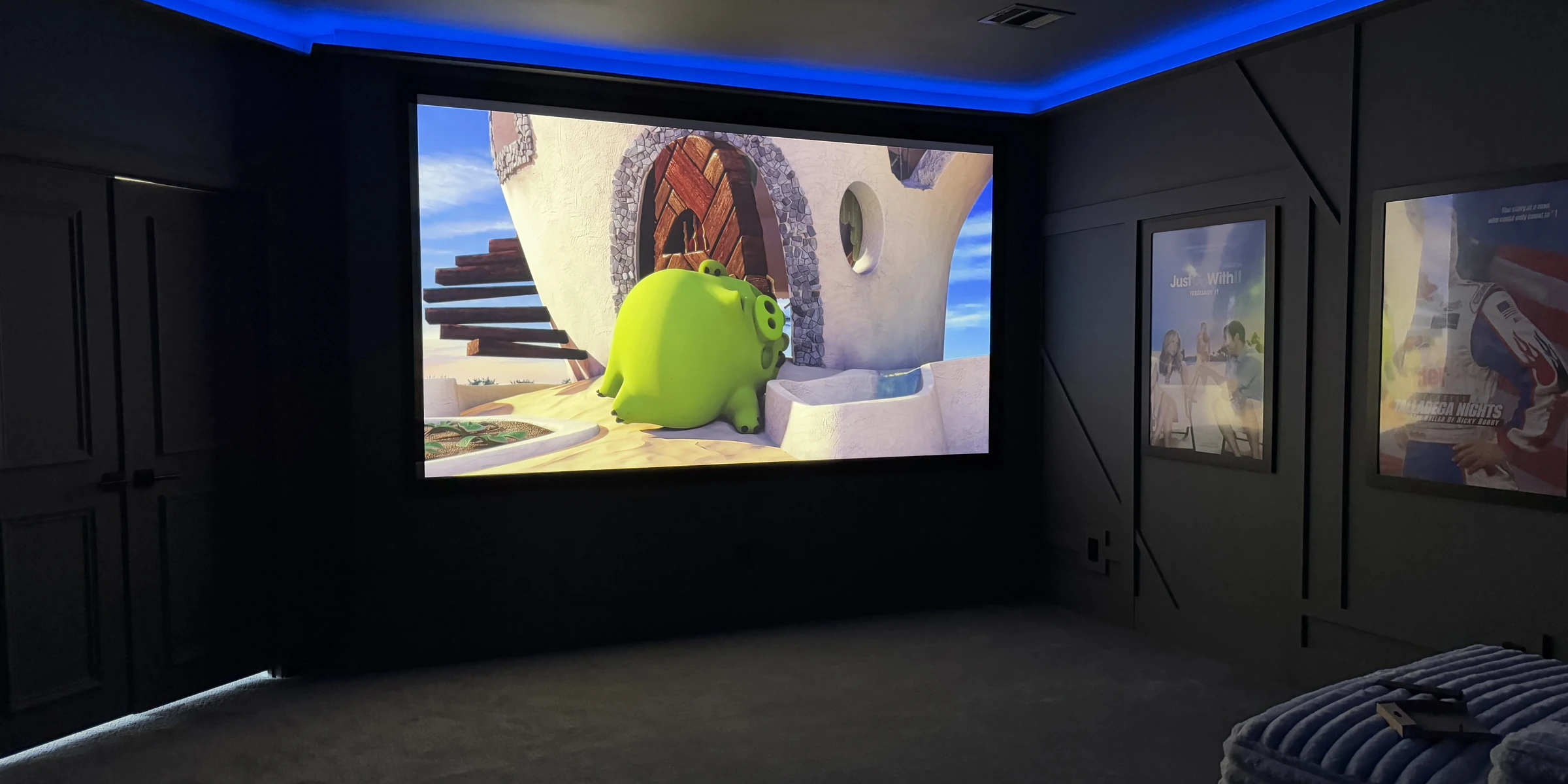
Designed as a room, not a shopping list.
The room
Sightlines and seating laid out before anything is ordered. Riser height, screen size and throw distance calculated for the seats, not the catalog.
The acoustics
Treatment specified with your designer so it disappears into the walls. Bass managed properly, because that is what separates a theater from a big television.
The calibration
Every system is calibrated and measured before we hand it over — picture and sound — and we keep the results on file, so a drift three years from now is something we can measure against rather than argue about.
Where the money actually goes
In a well-built theater the largest single line is rarely the electronics. It is the room: the riser, the soffit that hides the screen wall, the treatment behind the fabric, the isolation that keeps the bass out of the bedroom above. Spend the budget in that order and a modest processor sounds extraordinary. Reverse it and a reference stack sounds like a reference stack in a rectangular box, which is what it is.
Projector, or a very large television
A television wins on brightness and loses on scale, and the crossover is usually somewhere around a hundred and ten inches. If the room can be made properly dark and the throw allows a wide image, a projector with real processing gives you cinema. If the room has glass on two walls and the family watches daytime sport, a large panel is the honest answer and we will say so.
Sightlines are arithmetic, not opinion
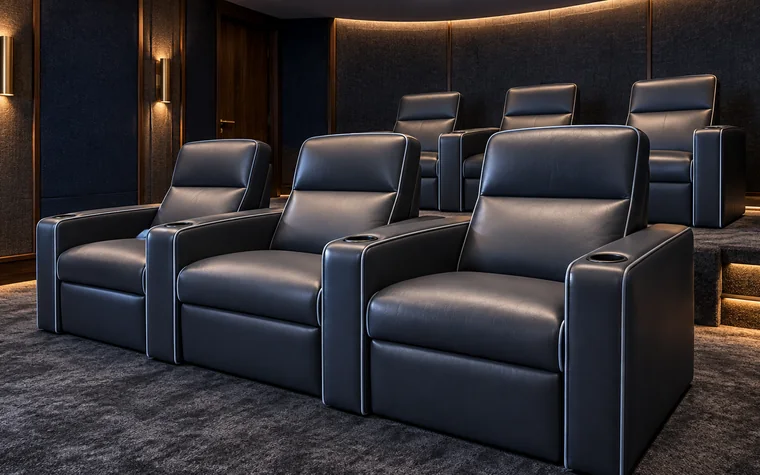
Row two has to see over row one, the bottom of the screen has to clear the head in front, and nobody should be craning. That is a calculation involving riser height, screen height, eye height and viewing distance, and it is done before a single seat is ordered. Rooms that disappoint almost always skipped it and bought the seating first.
Calibrated, measured, and on file
Every theater is profiled and measured before we hand it over, and the results stay on our side in the calibration software. That matters in three years, when something has drifted: there is a reference to measure against rather than an argument about what it used to sound like. Blue Note Encore keeps that measurement current.
Not every room is a theater
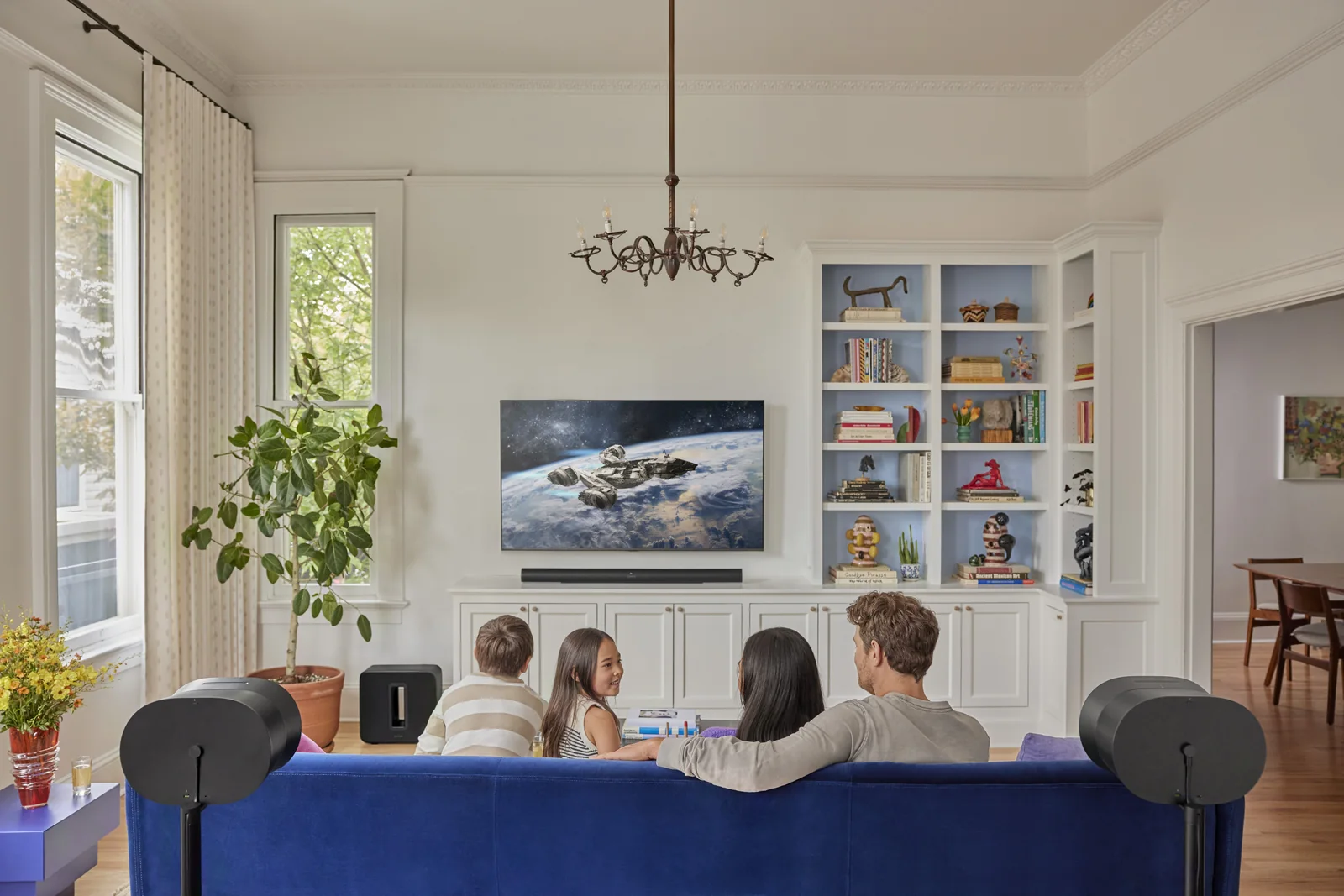
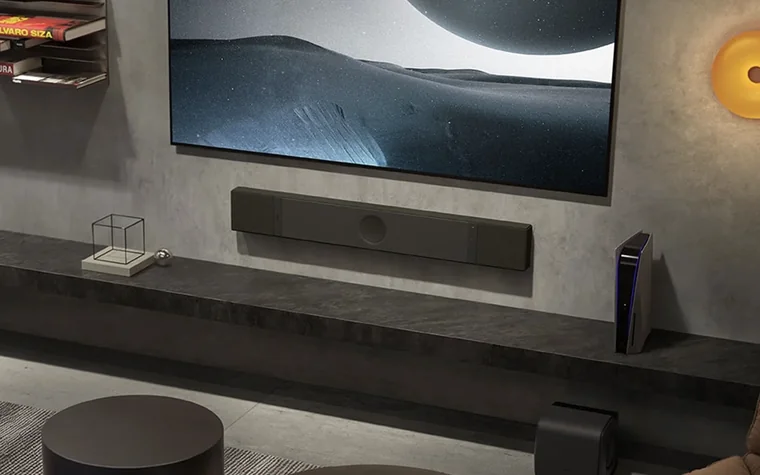
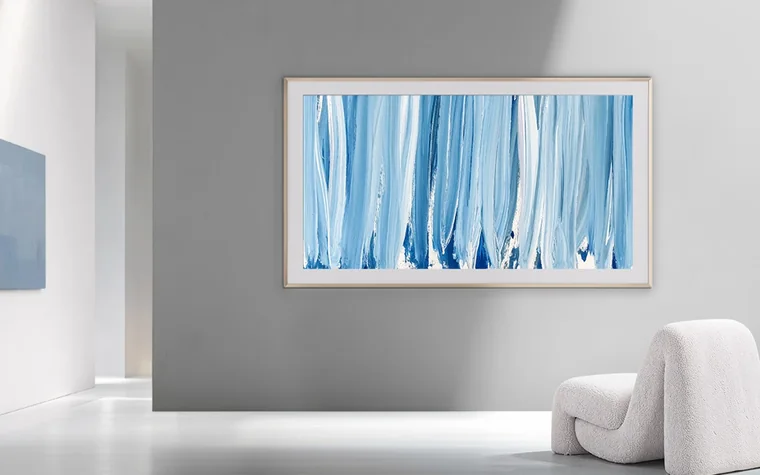
Most of what we install is not a dedicated room. It is a media room off the kitchen, a living room with a Frame over the fireplace, a bedroom set that disappears when it is off, a direct-view LED wall where a projector would never survive the daylight. The same rules apply at a smaller scale: a television sized and mounted for the seating, sound that does not come from the television, and one remote. Sony, Samsung, LG and TCL for the panels; DreamWall when the room wants a wall.
The room they already had
A television and a soundbar on a painted wall. Then the same wall with a laser projector, a 120-inch acoustically transparent screen with the front three and four subwoofers behind it, a lit slat wall, and the sound and control rebuilt to match. Same room, same seats.
- JVC DLA-NZ30 laser projector
- Screen Innovations Slate Acoustic 1.2, 120 in., fixed frame
- Focal 300 IWLCR6 in-wall left, center and right, behind the screen
- SVS quad 8 in. in-wall subwoofer system, behind the screen
- Marantz Cinema 60 receiver
- Kaleidescape Strato V movie player
- Control4 control
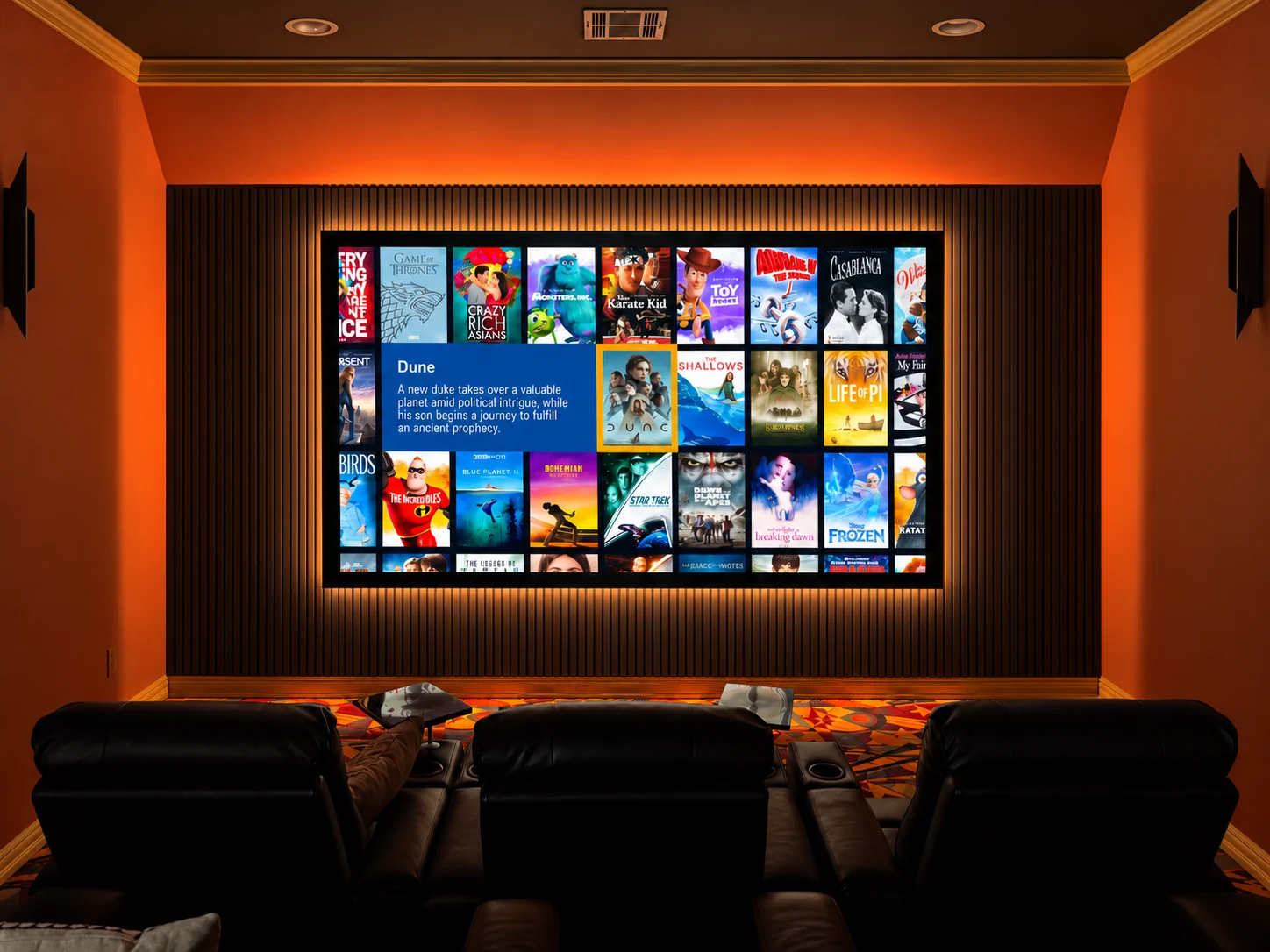
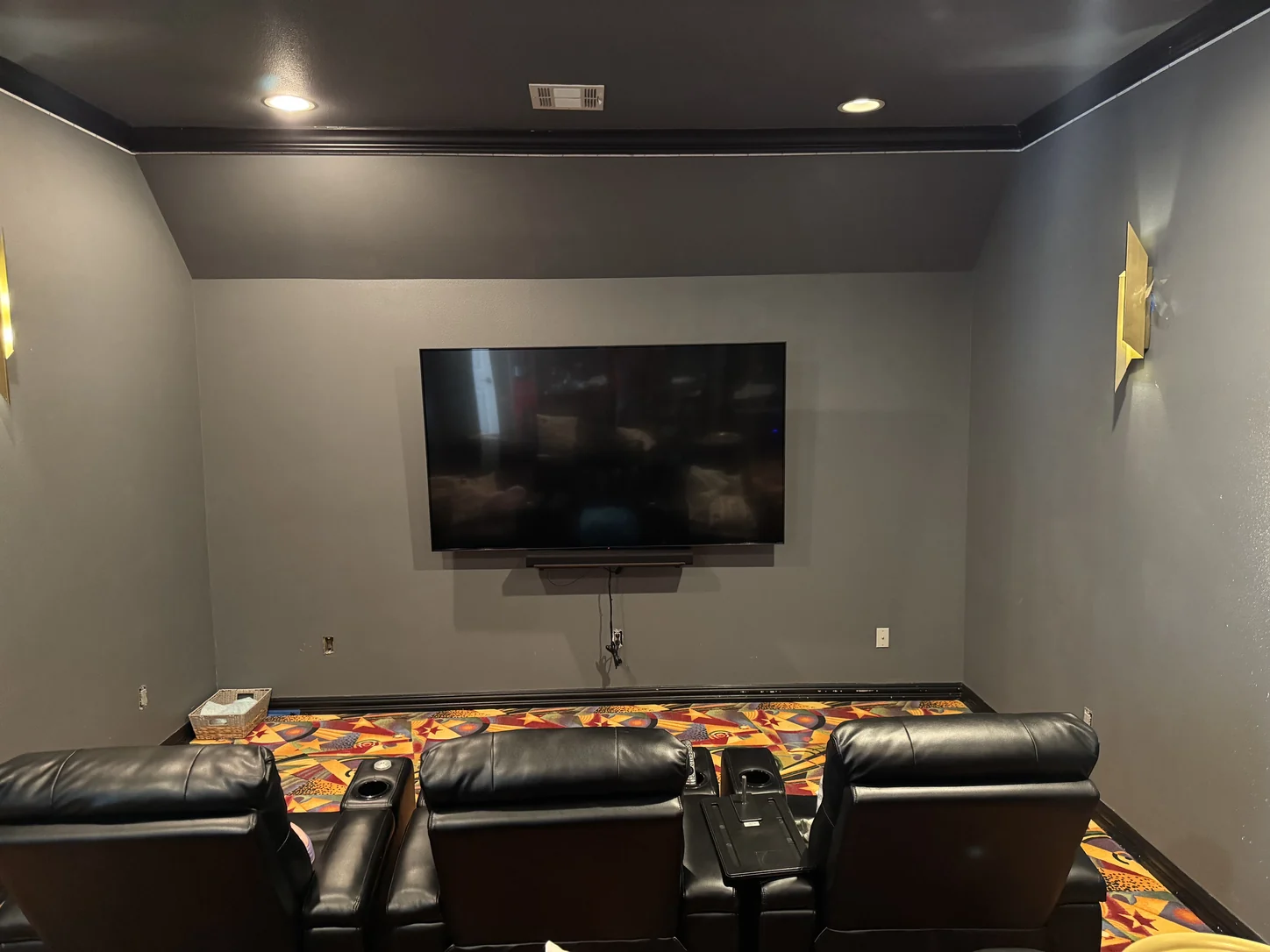 BeforeAfter
What an acoustically transparent screen hides
Day one: the screen frame is up, and inside it the front three speakers and four in-wall subwoofers are set, labeled and wired. Finish day: a 160-inch acoustically transparent screen is on and every one of them has disappeared behind it. The sound comes from the picture.
- JVC DLA-NZ500 laser projector
- Screen Innovations Slate Acoustic 1.2, 160 in., fixed frame
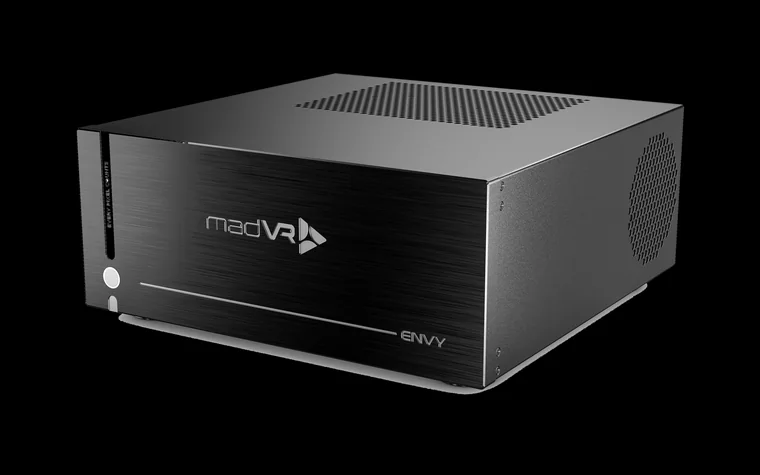
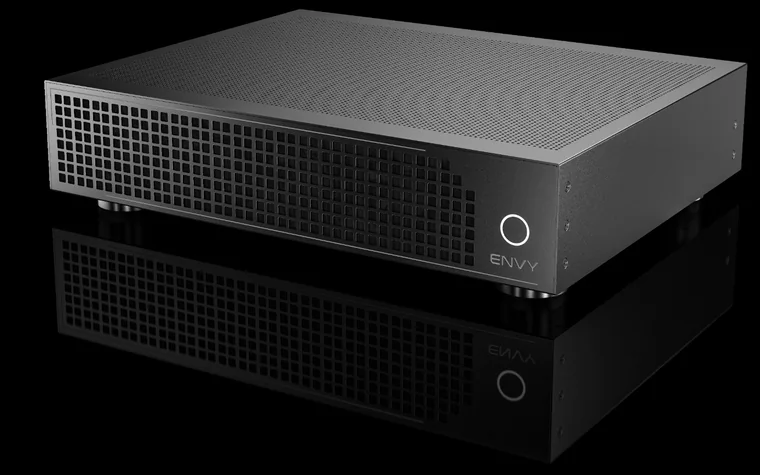
- madVR Envy Extreme video processor
- KEF Ci200Q in-wall and in-ceiling, 7.2.2
- SVS quad 8 in. in-wall subwoofer system, behind the screen
- Marantz Cinema 30 receiver
- Control4 control
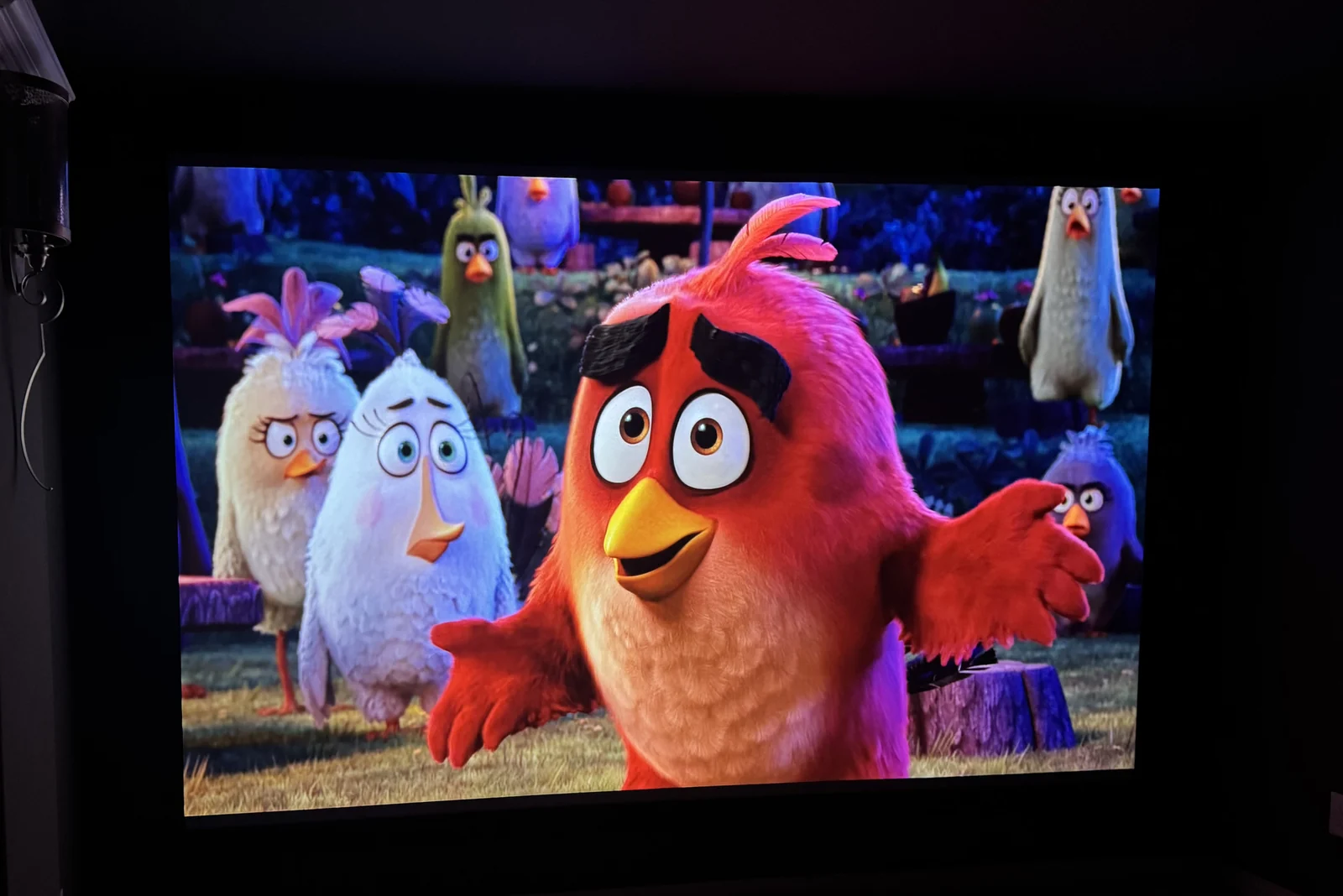
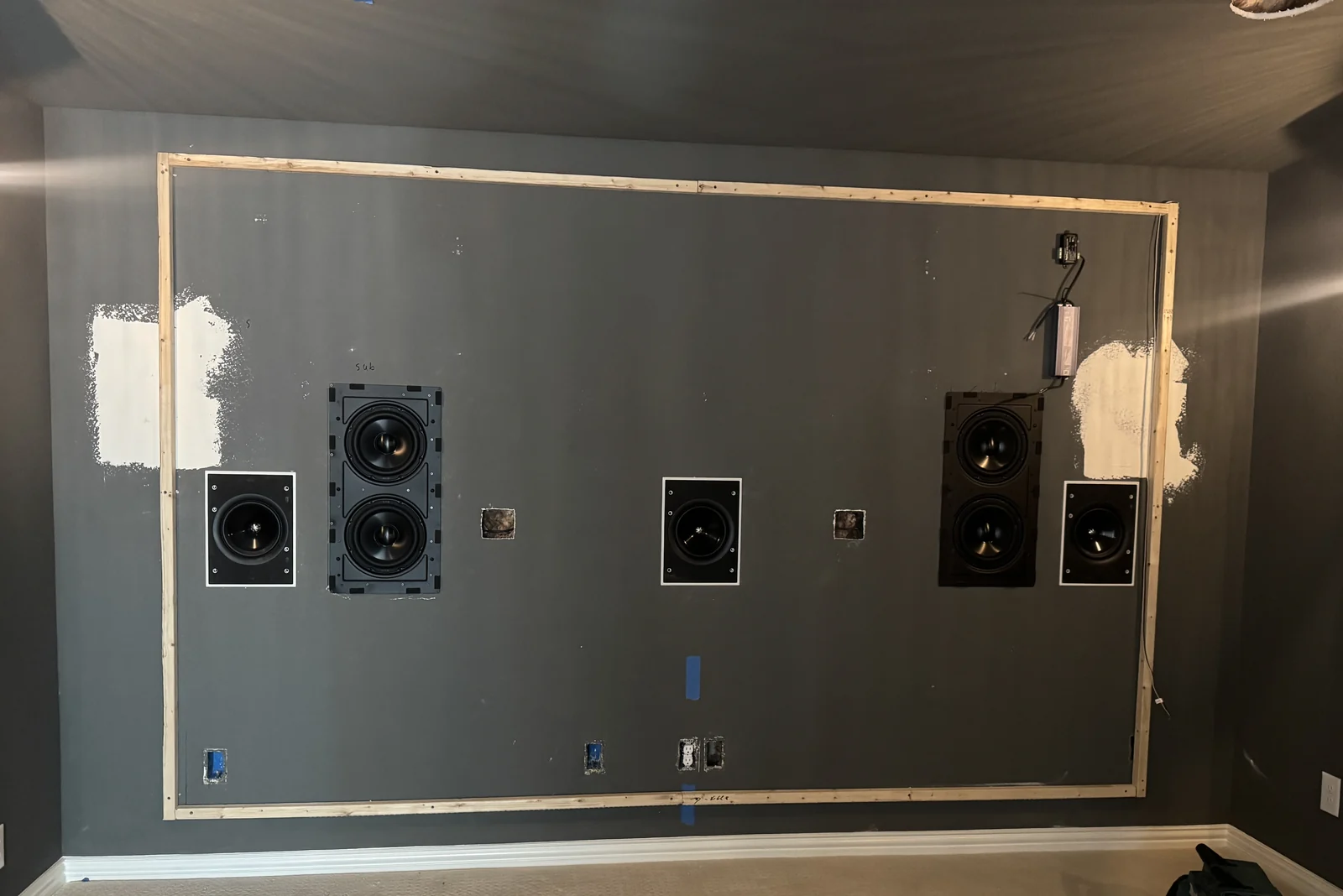 Day oneFinish day
Home Theater: the questions clients ask us first.
Do I need a dedicated room?
No, but you need a room you can control. A media room with shades that close and lighting on a scene will get you most of the way. A room with glass on two walls will not, whatever is installed in it.
What drives the cost of a theater?
Room construction, seat count and screen size, in that order. Acoustic treatment, isolation and the riser typically account for more of the budget than the electronics do, and they are the part that cannot be upgraded later without rebuilding.
How early should you be involved?
Before the walls close, ideally at the framing stage. We can retrofit a finished room, but wire routing, soffit depth and speaker placement all get compromised, and those compromises are permanent.
How long does one take?
A dedicated theater in new construction runs alongside the build for months, with our work concentrated at rough-in and again at trim. A retrofit media room is usually a matter of weeks once the equipment is in hand.




















Start with a conversation.
Fifteen minutes tells us both whether we are the right firm for the house. No payment, no obligation.
Telephone
214 718 3968Showroom
11410 Mathis Ave, Office 1, Farmers Branch, TX 75234 — Monday to Friday, 8:00am to 5:00pm, visits by appointment
Control4, Lutron, ELAN, Alta Labs and Kaleidescape. Design, programming and warranty registration all handled in-house.