
The plate on the wall is part of the room.
Keypads, shade fabrics, pockets, speaker grilles, displays and millwork openings are visible design decisions. We coordinate them with your finishes and your furnishings, at the point where you are making the rest of the selections — not after the room is done.
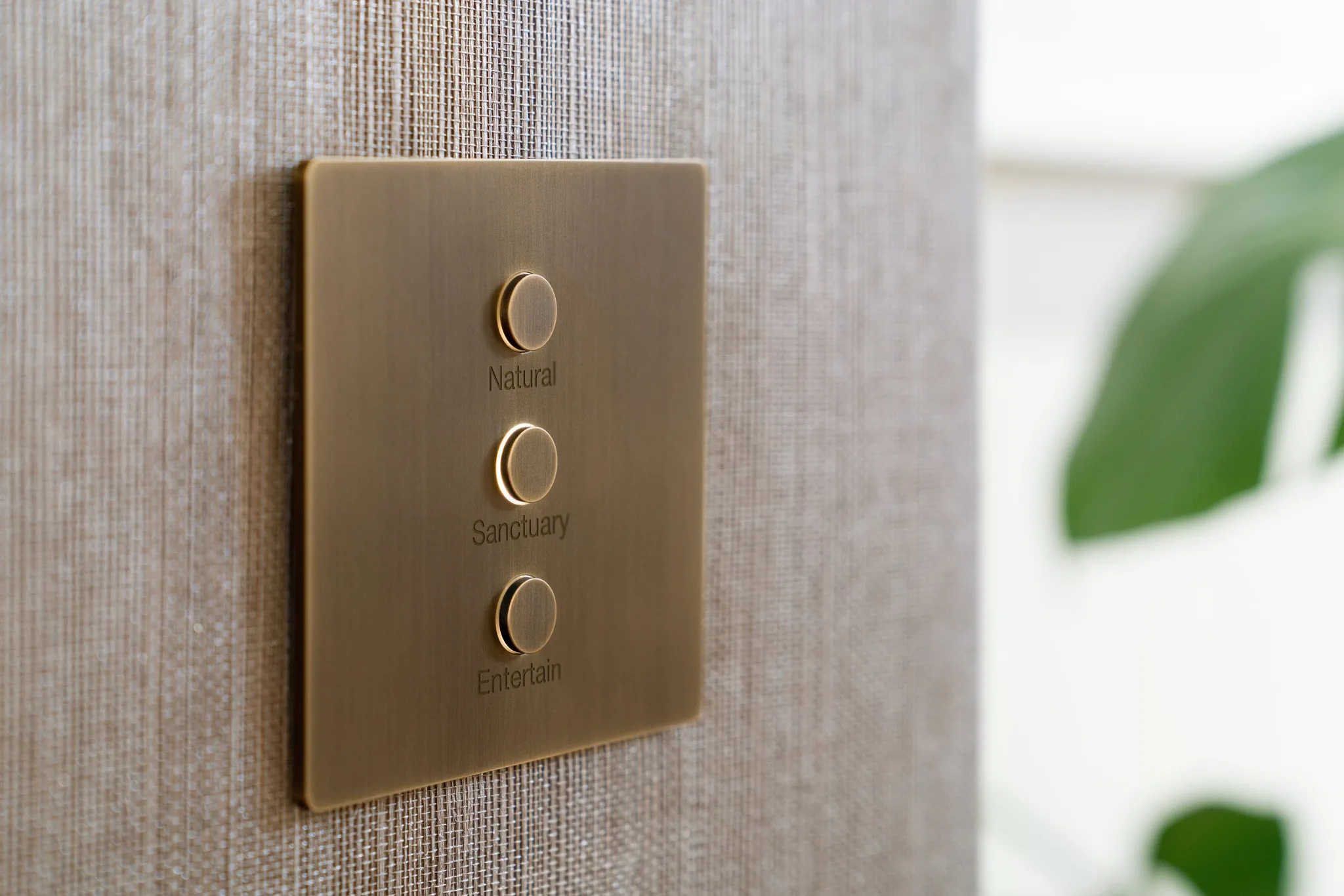 Photography: Lutron
The client sees the keypad every day. They see the rack never.
A room can be beautifully resolved and undone by a bank of six mismatched plates beside the door. That is not a technology failure. It is a selection nobody was asked to make, so a technician made it, in white plastic, at the last minute.
Everything we install that is visible is a finish. It has a material, a color and a placement, and it should be chosen the way you choose everything else in the room — from a sample, against the stone and the hardware and the paint, while it can still change.
The selections we bring you
A keypad schedule
Style, metal finish, engraving text and button count, room by room. Engraving matters more than people expect — it is the only text on the wall, and it should read the way the client speaks, not the way an installer labels.
One plate, not a switch bank
Most of what looks like six switches should be one keypad with scenes on it. Fewer plates, less wall, and the room's lighting reduced to the four things the client actually does in it.
Fabric, openness and hem
Fabric selected from the book against your scheme, with the openness factor chosen for the view and the glare rather than picked off a chart. Hembar profile and finish are a selection too.
Pocket, fascia and dual-roller
Whether the shade disappears entirely, sits behind a fascia, or shares an opening with a sheer. The decision changes the head detail, so it belongs in the drawings and not in a field measure.
Grilles and millwork openings
Speaker grille color to match or take paint, and the opening in the cabinetry sized against the actual chassis and its ventilation, before the millwork is cut.
Samples in the showroom
Keypads in the finishes, fabrics from the book, and lighting you can stand under and see change. Bring the client, or bring the stone.
When we need to be in the conversation
- 01
Selections
While finishes are being chosen, not after. Keypads and fabrics are finishes.
- 02
Documents
Locations and details to the architect and builder in their sheets.
- 03
Before rough-in
Placement confirmed on site — two inches is the difference on a keypad.
- 04
Millwork
Openings and ventilation confirmed against the actual equipment before cutting.
- 05
Trim
Plates, grilles and shades installed last, after paint, with the room protected.
Three things we will not do to you
We do not change a finish without asking.
If a specified plate or fabric is discontinued, you choose the substitute. We will bring options and a recommendation, but the selection stays yours.
We do not sell around you.
Your client is your client. We are not introducing them to anyone, and anything outside our scope comes back to you first.
We do not leave a device where it spoils the room.
If the only acoustically correct speaker position lands in the middle of your ceiling detail, that is a conversation about the system, not a hole in your ceiling.
Where this touches the rest of the house
Motorized Shading →
Four Lutron collections, the fabrics, and where each system belongs.
Lighting Control →
Ketra light that moves with the day, and hardware meant to be seen.
Residential Architects →
The same coordination, from the drawing side of the table.
The showroom →
Farmers Branch, by appointment. Bring the client, or bring the stone.
Coordinate a project with us.
Floor plans and elevations at whatever stage they are at. Reflected ceiling plans if they exist. The rough schedule. Nothing needs attaching now — the secure upload link comes with our reply. The initial plan conversation is provided at no charge, with no obligation at the end of it — detailed marked-up drawings are produced as part of the agreed design scope.
Telephone
214 718 3968Lee is on the drawings, on the site walk, and on the phone when a framer has a question at seven in the morning. The people who design and commission the system are the people who answer when you call about it.
Coordinate a project with us →