
The view, edited.
Sheers for the glare, blackout for the bedrooms, both on one track when the room asks for it. Fabric chosen with your designer, hardware hidden in the pocket, motors you will never hear.
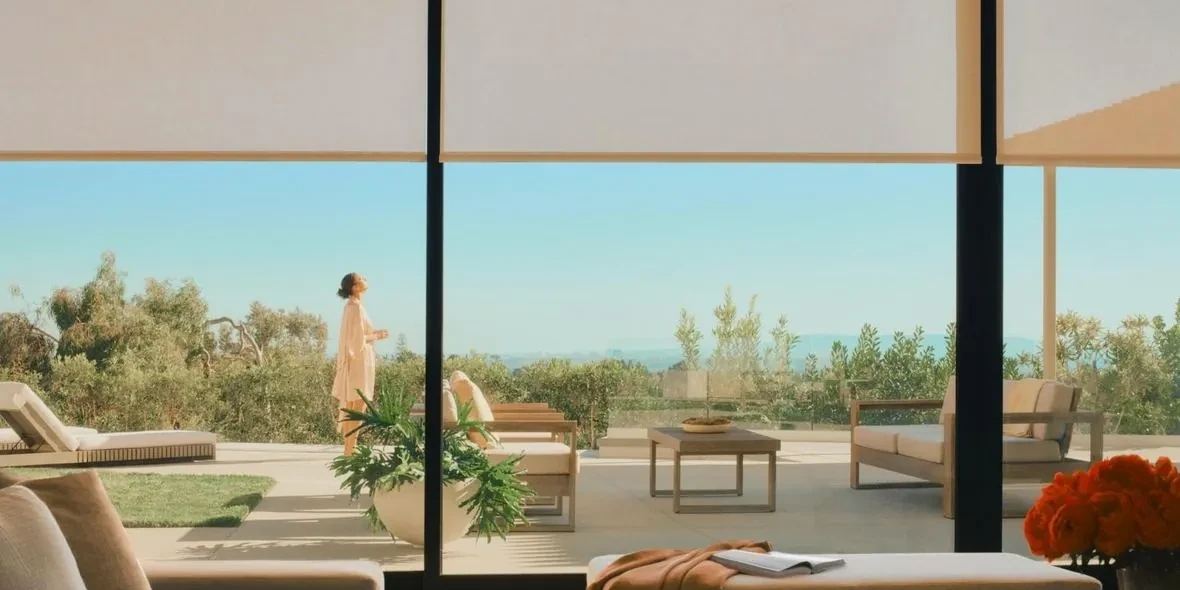 Photography: Lutron
Specified with the designer, not after them.
Fabric & hardware
Openness factor chosen for the orientation of the glass. Fascias, pockets and brackets specified while the ceiling detail is still on paper.
Automation
Shades that move with the sun rather than with a remote. Astronomic timeclock, so the house looks after itself whether or not anyone is home.
Integration
Shades, lighting and HVAC on one system. Closing the shades at dusk should not require a second app.
Wired shades and battery shades solve different problems
Wired shades are quieter, faster, never need charging, and have to be planned before the drywall. Battery shades go into a finished house in an afternoon and want new cells every few years, sooner on a large west-facing window that cycles twice a day. In new construction we run power. In a finished house we usually do not, and we say which rooms will notice.
Openness factor is the decision that matters
A three percent sheer cuts glare and keeps the view. A one percent keeps more of the view and less of the glare. A five lets the room stay bright and gives up some of the outside. That choice is made per elevation, against what the glass actually faces, and it is the difference between a shade you use and one you leave up. We hold full sample sets, so it gets decided against the actual weave in real light rather than a swatch on a screen.
The pocket is specified while the ceiling is on paper
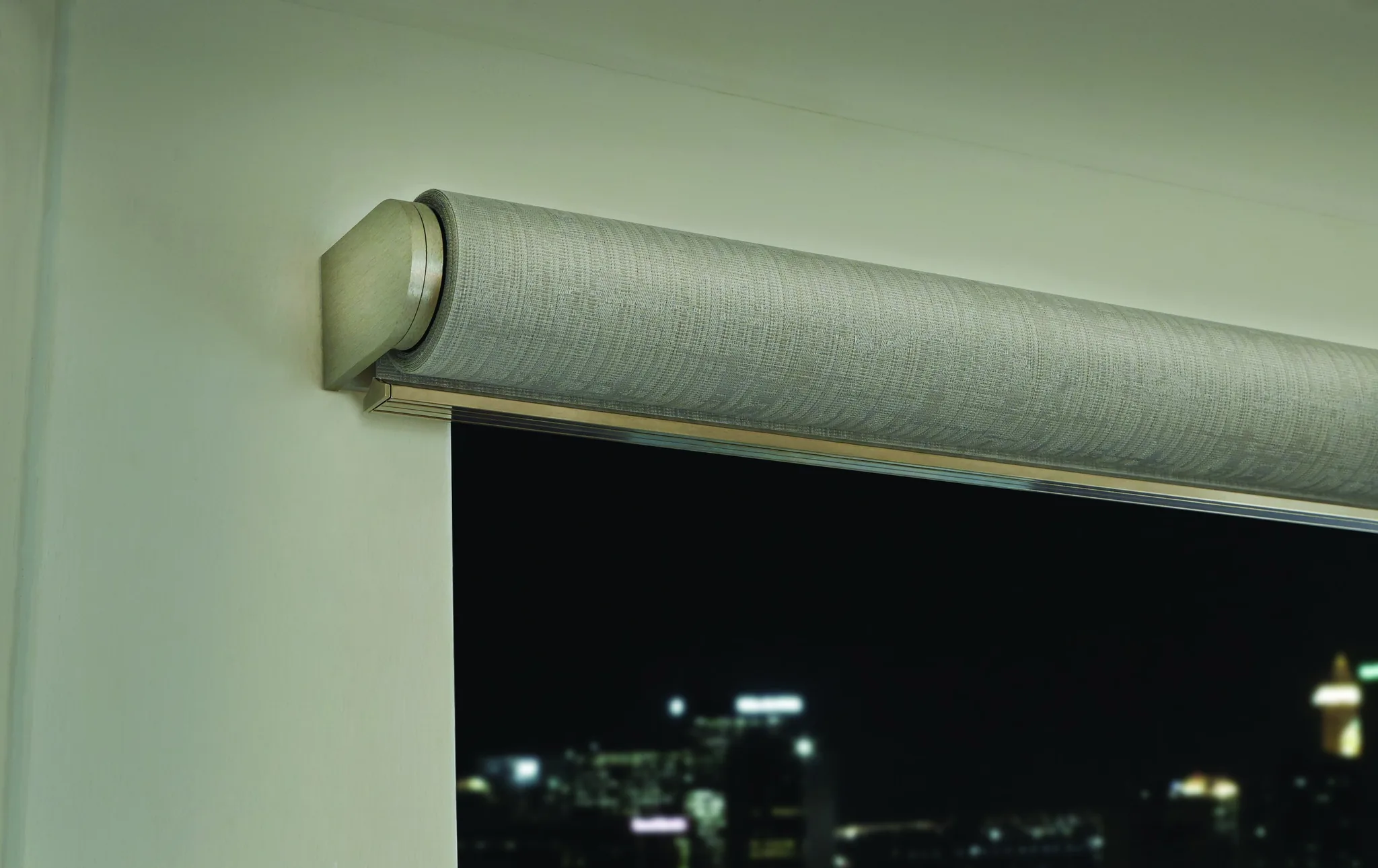
A shade in a proper pocket is invisible: no fascia, no visible roller, a clean reveal. That requires depth in the ceiling detail, which requires the conversation to happen with the architect rather than after the plaster. Bring us in late and the honest options are a fascia or a surface bracket.
Automation is what makes them worth having
Shades on a remote get used for a month. Shades on an astronomic timeclock — closing against the low afternoon sun on the west side, opening in the morning on the east — stop being something you operate and start being something the house does. That is also where the energy saving is. On wood blinds it goes further again: Natural Light Optimization tilts the slats against where the sun actually is for this latitude, hour by hour, so the room keeps its daylight without the glare that comes with it.
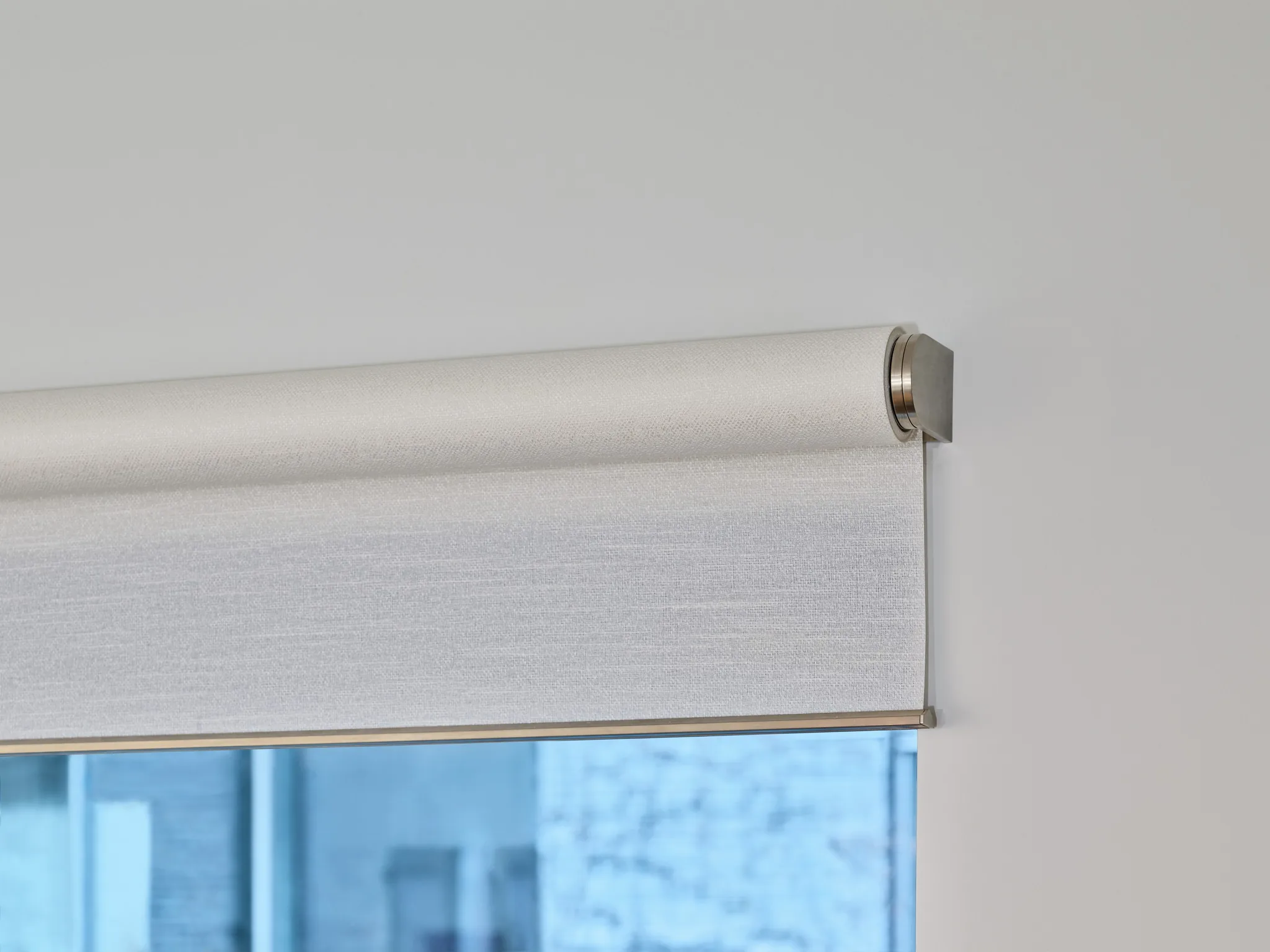
Brackets, fascia and alignment are the whole job.
A shade is judged on the eighth of an inch. Consistent reveals, hembars that land level across a run of six windows, and a fascia that returns cleanly into the pocket — that is what separates a fitted shade from a hung one.

Three decisions, not one
Most shade conversations collapse into “motorized or not”. There are really three questions and they get answered separately: what it looks like, what drives it, and what it is made of.
What you see
- Roller
- The workhorse. Sheer to keep the view, privacy in between, blackout where the room has to go dark. Fabric comes from any of the four Lutron collections, and the openness factor is the real decision — made per elevation, against what the glass actually faces.
- Roman
- Cascading fabric folds, in your own material or from any of the four Lutron collections. Where a shade needs to read as a soft furnishing rather than a mechanism.
- Cellular
- Insulated honeycomb — the one that actually does something measurable for heat, in light-filtering or room-darkening.
- Drapery
- Motorized track on custom-tailored fabric, running on the same system as everything else.
- Blinds
- Automated slat and vane tilt, for fine-grained privacy without giving up the whole window.
- Tension and skylight
- Angled and overhead glass, where a shade simply cannot hang under its own weight.
What drives it
- Triathlon
- Pro-grade and wire-free. Rollers, cellulars and wood blinds. The retrofit answer when the walls are closed and nobody is opening them.
- Sivoia QS
- The range that covers nearly everything: rollers from a small window up to three hundred square feet, tensioned and skylight, drapery track, Roman, sheer and wood blinds. Wired as standard, or wireless with battery backup.
- Palladiom
- Hand-finished solid aluminum brackets, wired or wire-free. For when the hardware is part of the architecture rather than something to hide.
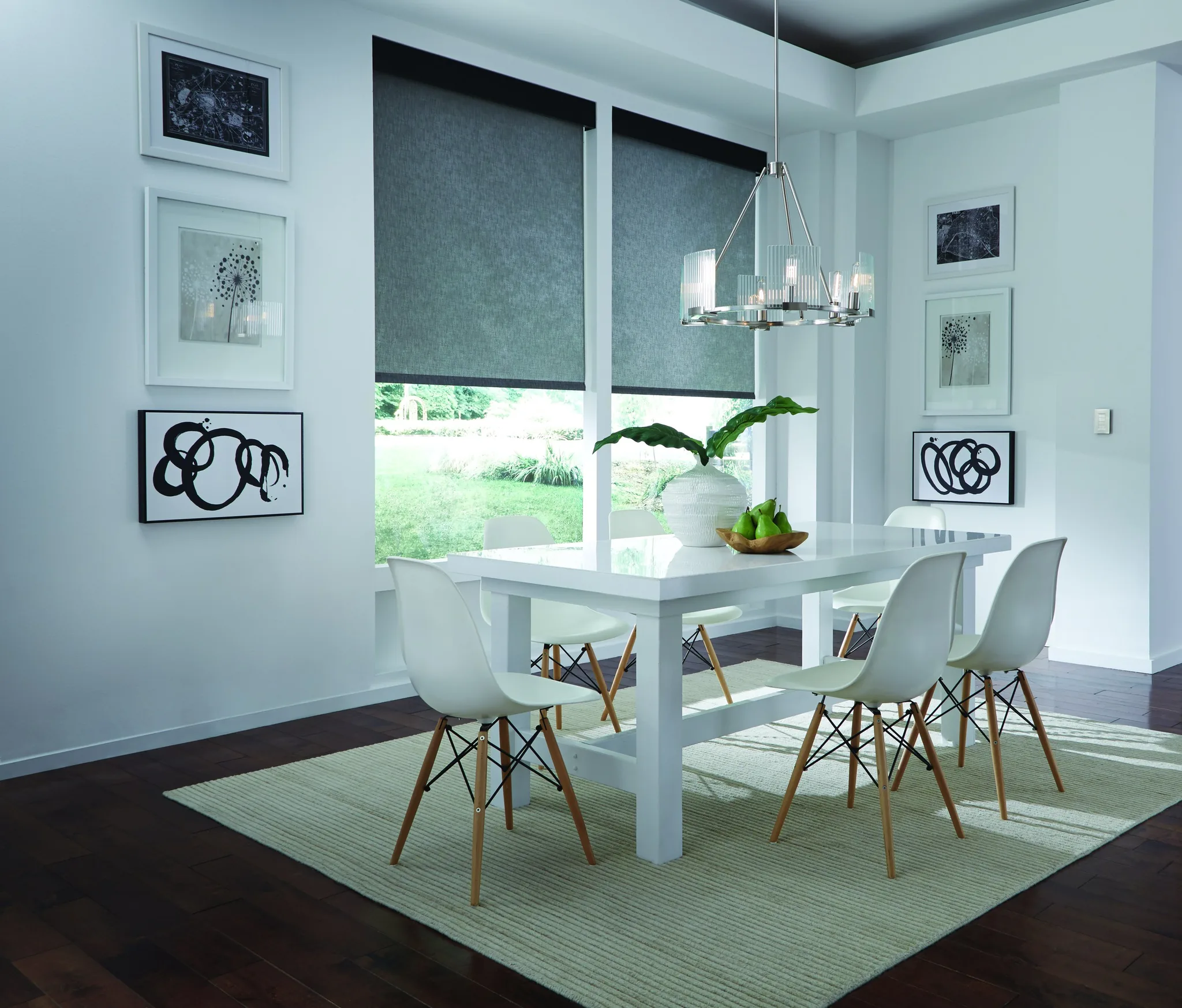
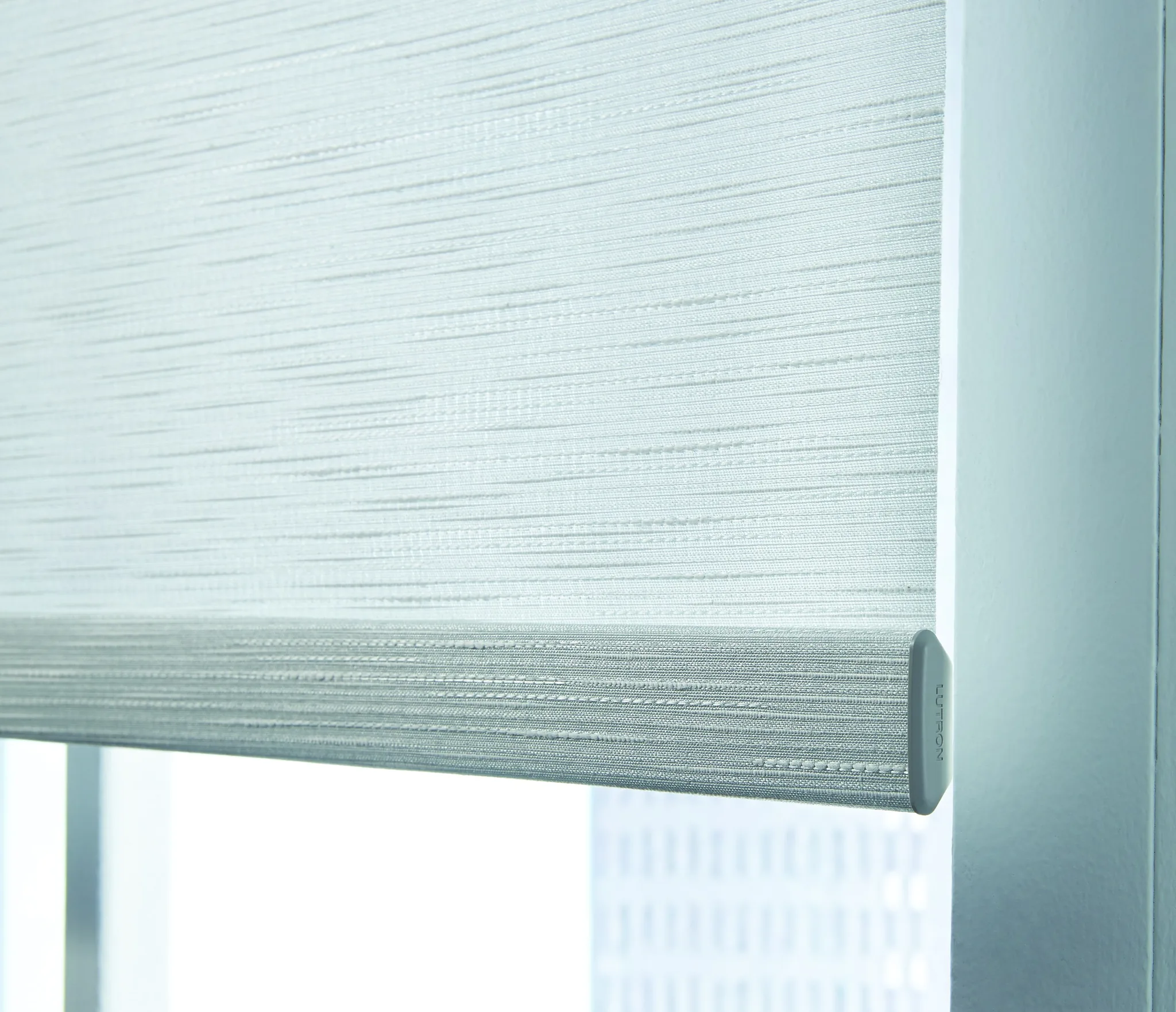
Four collections, and the samples are in the showroom.
- Atelier
- Gallery
- Classico
- Architectural Honeycomb
Weave, color and openness are chosen by hand, against the light the window actually gets. Holding full sample sets of the range is part of what Silver requires every year — which is why this is an afternoon with real fabric rather than a catalog and a guess.

Lutron Silver Dealer
Silver is renewed annually. It requires year-over-year volume targets, yearly certification, and training, testing and certification across the Lutron range — from Caséta at the entry through to HomeWorks, plus Palladiom and Ketra.
Not every dealer holds all of them. A dealer certified to part of the range will specify the part they can install.
It also requires holding full sets of shade samples. That is why you can see and handle the actual fabrics, at the actual openness factors, before you choose — rather than picking a window covering off a screen.
How loud are they?
A quality wired motor is a soft hum you notice once. Battery motors are slightly louder. In a bedroom, on a shade that runs at dawn, that difference is worth paying for.
Can shades be retrofitted?
Yes, with battery motors, and the result is good. The compromises are charging every few years and a visible bracket or fascia where there is no pocket.
What drives the cost?
Fabric, width and whether the run is wired. Wide windows need heavier tubes and stronger motors. Dual roller — sheer and blackout on one window — roughly doubles the hardware.
Do they work with our lighting system?
That is the point of specifying them together. Shades, lighting and climate on one system means one keypad and one app, rather than a shade remote in a drawer somewhere.



Monitoring, firmware and a technician on a written clock. From $59/month.
Existing systemThe Rescue ProgramInstalled by someone else? We certify it first, then we cover it.
See the workProjectsRecent installations across Southlake, Westlake, Northlake and Grapevine.
For designersInterior DesignersFabric, openness and hembar selected against your scheme.
For architectsResidential ArchitectsPocket depth, fascia and dual-roller in the head detail.
Start with a conversation.
Fifteen minutes tells us both whether we are the right firm for the house. No payment, no obligation.
Telephone
214 718 3968Showroom
11410 Mathis Ave, Office 1, Farmers Branch, TX 75234 — Monday to Friday, 8:00am to 5:00pm, visits by appointment
Control4, Lutron, ELAN and Alta Labs. Design, programming and warranty registration all handled in-house.