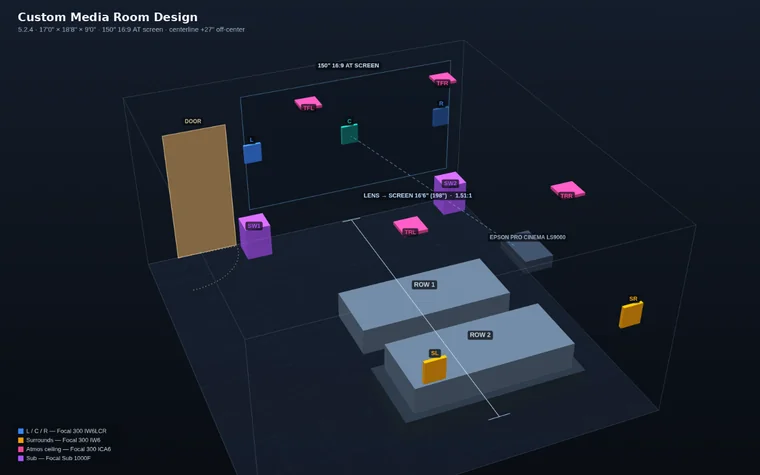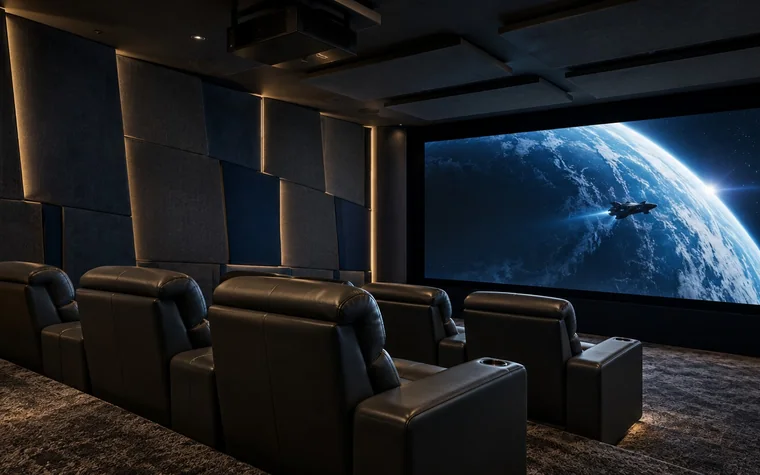
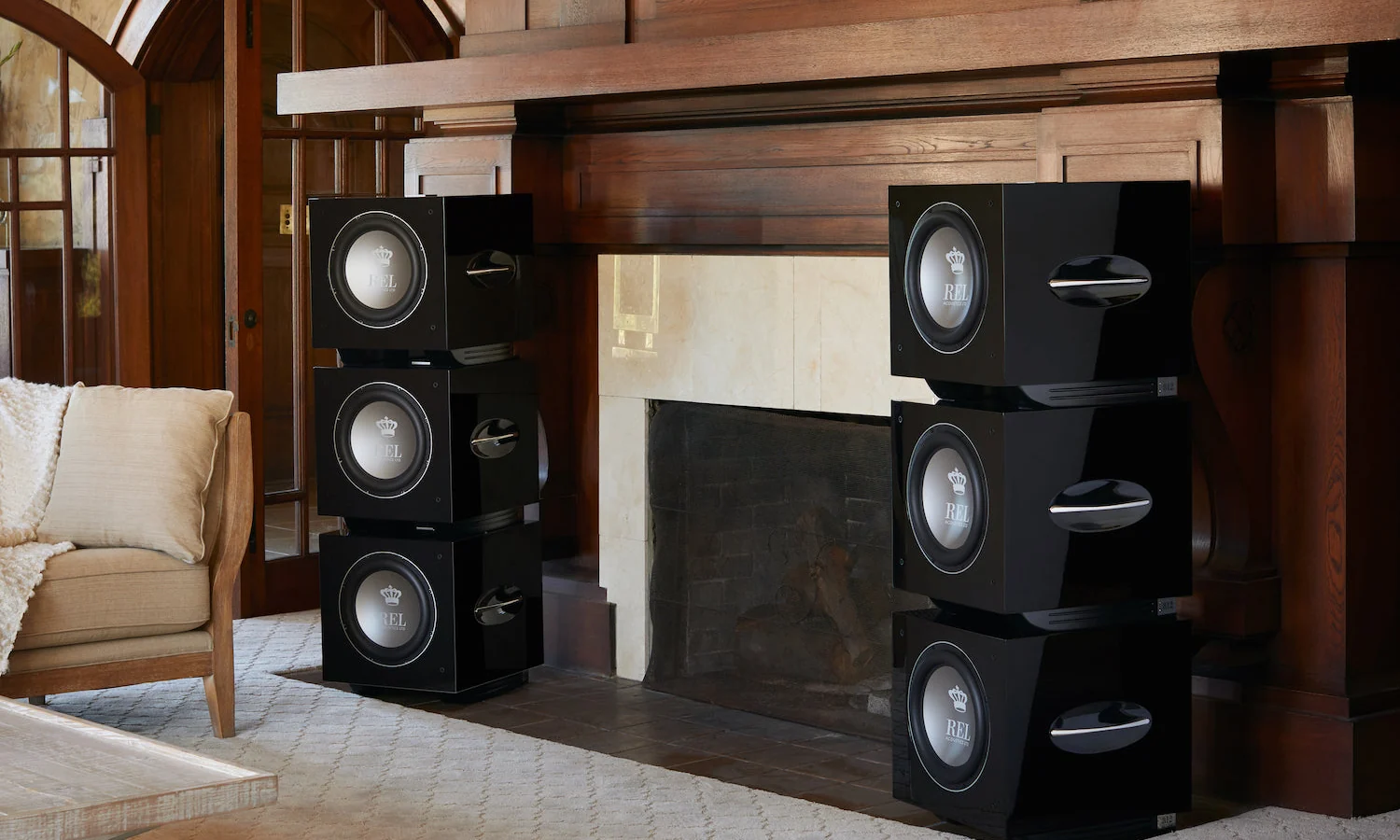
In most high-end systems the weakest link is the bass, and not for the reason people assume. The subwoofer is usually big enough; the problem is the room. Below about 100 Hz, sound behaves like water in a pool, piling up in some spots and canceling in others, so one listener hears thunderous bass while the person one seat over hears almost none. A bigger subwoofer does not fix that. The answer, proven by decades of research and by the way we build rooms, is more than one sub, placed deliberately and then calibrated to the room. Here is why, and the brands we trust to do it.
The ProblemWhy One Sub Cannot Win
Every room has resonances, called room modes, set by its dimensions: certain bass notes reinforce and others cancel depending on where you sit. A single subwoofer excites those modes from one point, which guarantees peaks and nulls scattered around the room, a seat with boomy, one-note bass and a seat a few feet away where the kick drum simply disappears. No amount of volume or equalization fixes it, because the dead spot is a physical cancellation, not a lack of output. This is why a system with a superb single sub can still have bass that falls apart the moment you move off the sweet spot. It is physics, not a product flaw.
The FixMore Than One
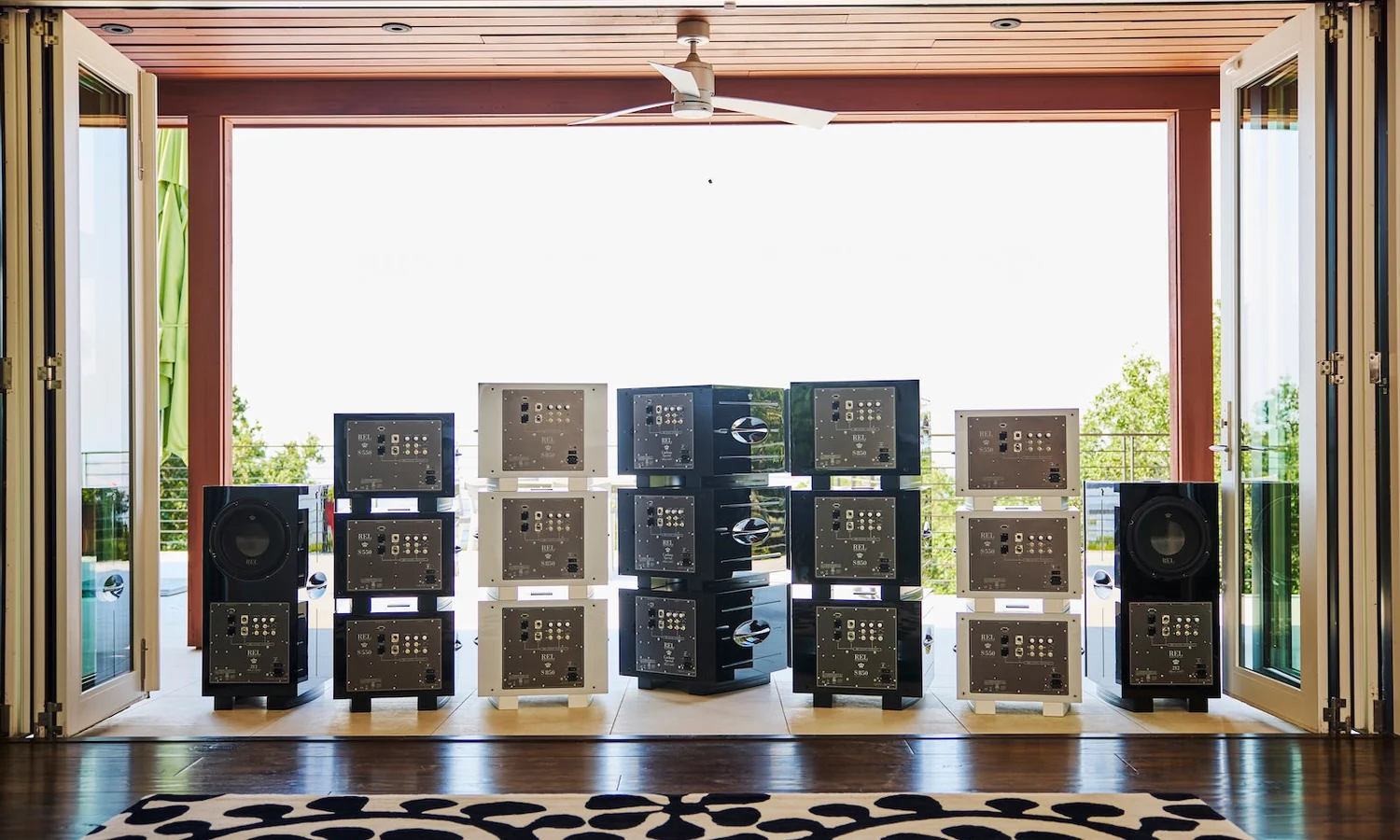
The fix comes from acoustics research, most famously Todd Welti’s work at Harman: put more than one subwoofer in the room, in the right places, and the peaks and nulls from each one partly fill in the others, smoothing the response across every seat. Two subs at the midpoints of opposing walls perform nearly as well as four and are the practical sweet spot for most rooms; four buys the most consistency in a large theater. The point is not more bass. It is the same bass everywhere, so every seat hears what the mix engineer intended. Once you have heard a properly distributed system, a single sub always sounds like a compromise.
RELBass You Feel, Built to Stack
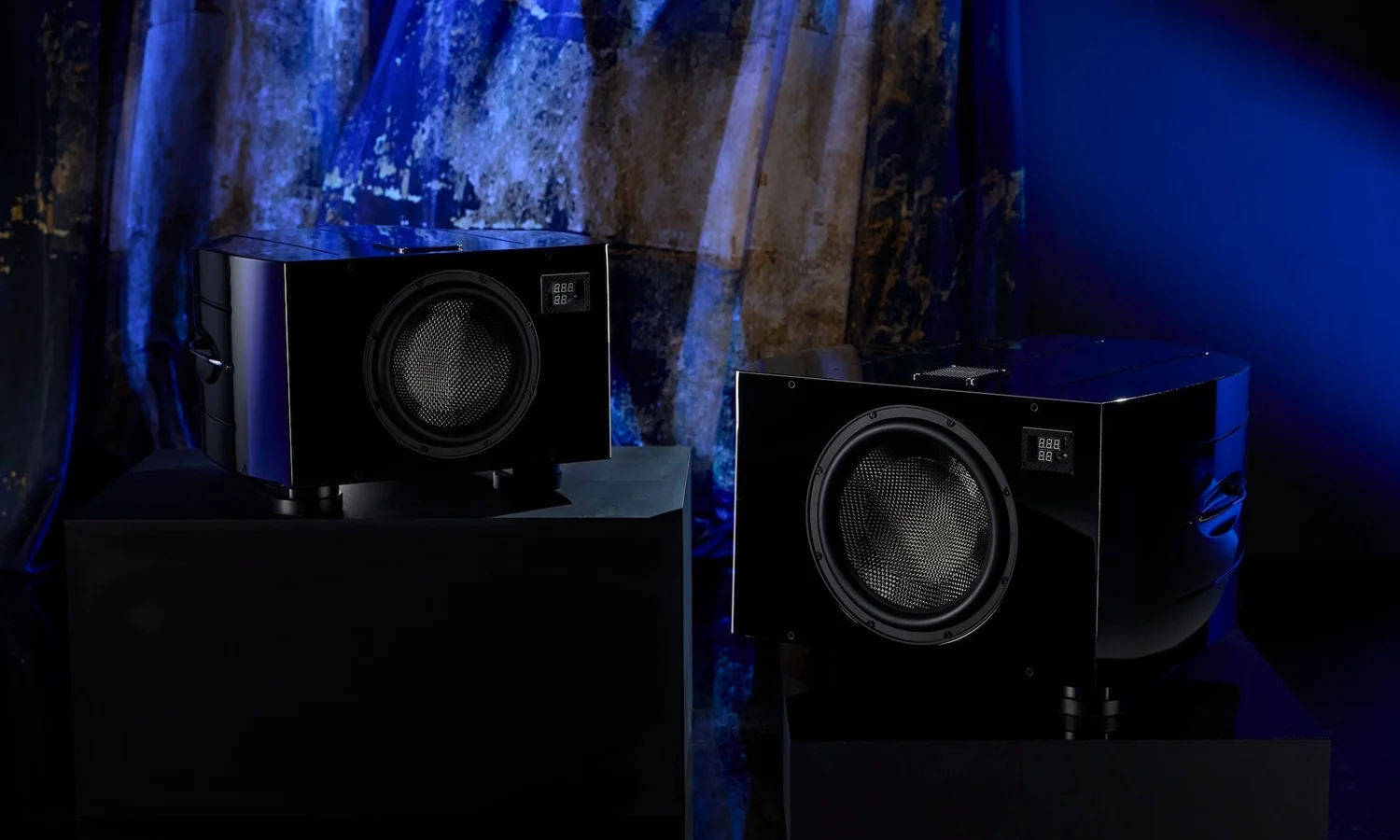
We start most conversations with REL, because no brand thinks harder about integrating bass with music. A REL connects to the high-level outputs of your amplifier, the same signal feeding your main speakers, so it hears exactly what the mains hear and blends in rather than thumping along as a separate box. REL also built a philosophy around multiples: matched pairs behind the main speakers and, at the extreme, vertical line arrays of three matched subs per side, which REL describes as not just more bass but better bass, with a taller, deeper stage. The range runs from the compact Serie T/x through Serie S and the Carbon Special to the Reference No.31 and the flagship No.32, and it is built to grow a pair at a time.
Bowers & Wilkins and FocalSubs That Match the Mains
For a system built around a particular speaker, matching the subwoofer to the mains matters. The Bowers & Wilkins DB Series uses twin opposed Aerofoil drivers; in the DB2D they are the same 10-inch drivers found in the flagship 800 Series Diamond, with digital amplification and app-based room equalization that tunes the sub to the space. It is the natural partner for a B&W system. Focal covers both worlds: the sealed Sub 1000 F for a tight, fast musical bottom end, and the 1000 IWSUB Utopia, a passive in-wall subwoofer, driven by its own amplifier, for rooms where the bass has to disappear into the architecture entirely. In both cases the goal is the same: bass voiced to belong with the speakers it sits beneath, not bolted on.
SVSThe Multi-Sub Value Play
SVS is what makes going to two or even four subwoofers realistic on most budgets, which is exactly why it belongs in a conversation about multiples. Its subs come sealed for the tightest, most accurate bass or ported for maximum output, from the 1000 Pro and the new 3000 R|Evolution series up to the 17-Ultra R|Evolution flagship, and every one ships with a good smartphone app with room equalization, parametric EQ, presets and phase control built in. For a client who wants the even, room-filling bass that only multiple subs deliver, SVS is often how we get there without the cost of four reference subwoofers: real performance, sanely priced and easy to live with.
DiracCalibrating the Whole Room
Placing multiple subs well gets you most of the way; calibration takes you the rest. Dirac Live Bass Control treats all of your subwoofers and main speakers as one system, aligning their phase and arrival times and flattening the combined response so bass is consistent from the front row to the back, not merely optimized for a single microphone position. Its newer sibling, Dirac Live Active Room Treatment, goes further, using every speaker and sub in the system together to cancel the room’s resonances before they build: much of what acoustic panels do, without changing how the room looks. Run on a capable processor, it is the step that turns good hardware into bass that disappears into the music.
| Brand | What It Is | Where It Belongs |
|---|---|---|
| REL | High-level connection, matched pairs and three-high line arrays; Serie T/x to the No.32 | A music-first two-channel room, and any system where the sub has to vanish into the mains |
| Bowers & Wilkins DB | Twin opposed Aerofoil drivers with app-based room EQ; DB2D shares the 800 Series drivers | Beneath a Bowers & Wilkins system |
| Focal | Sealed Sub 1000 F; passive 1000 IWSUB Utopia for in-wall | Focal systems, and rooms where the bass must disappear into the wall |
| SVS | Sealed and ported, 1000 Pro to 17-Ultra R|Evolution, with a full-featured app | Getting to two or four subs on a sane budget |
| Dirac Live | Bass Control and Active Room Treatment, run on the processor | Every multi-sub system we build |
How We Build ItPlacement and Pairs
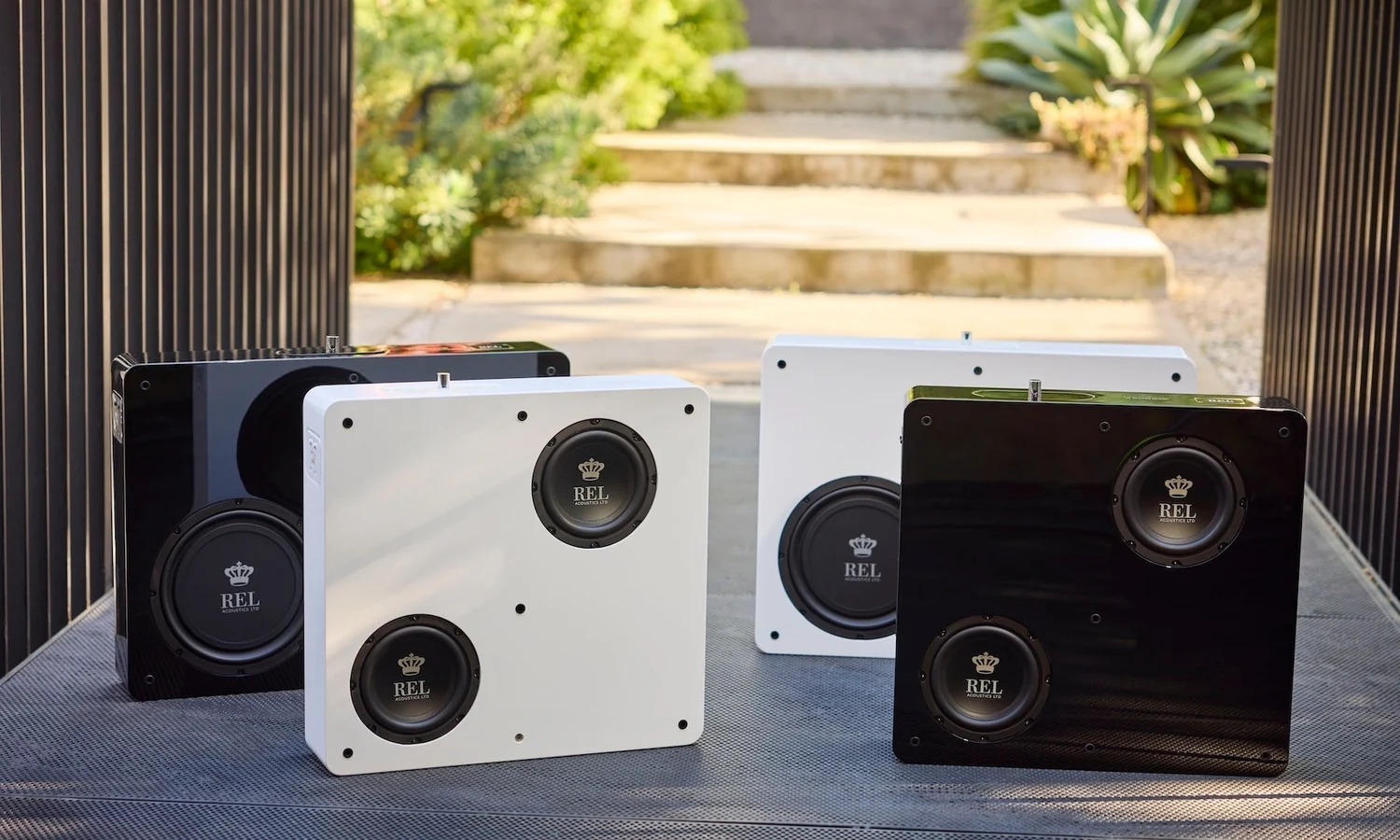
In practice we design the subwoofers in from the start: usually two, sometimes four, placed where the room wants them rather than where they happen to fit, wired high-level or line-level depending on the system, and then calibrated with Dirac once everything is in. The brand follows the system. REL for a music-first two-channel room, Bowers & Wilkins or Focal to match a specific speaker, SVS to bring multiple subs within reach. The method is constant. Bass is the one part of a system where the room, not the box, is the hard problem, and solving it is most of what we do.
One excellent subwoofer is better than none. Two, placed and calibrated properly, beat one of almost any size.— Blue Note A/V
The FitWho It Is For
This is for anyone who has spent real money on a system and still finds the bass boomy in one chair and thin in the next, or who simply wants music and movies to carry the weight and evenness they have in the best rooms. For a dedicated listening room or theater it is the single most effective upgrade we can make, and the one clients are most surprised they lived without.
Design your bass with us
Tell us about the room and what it plays, and we will tell you how many subwoofers it wants, where they go, and which brand belongs in it.
Start with the free call