A real home theater is not one purchase; it is a chain of them, and the chain is only as good as its weakest link. A reference projector in front of the wrong screen, a world-class processor feeding modest speakers, or beautiful sound no one can turn on without a lesson: any of these turns a six-figure room into a disappointment. The craft is not in buying the best of everything; it is in choosing parts that hold up the next one and tuning them to the room until they disappear into the movie. This is how we build a dedicated theater, end to end, and why every piece is chosen with the others in mind.
The Room FirstWhere a Theater Begins
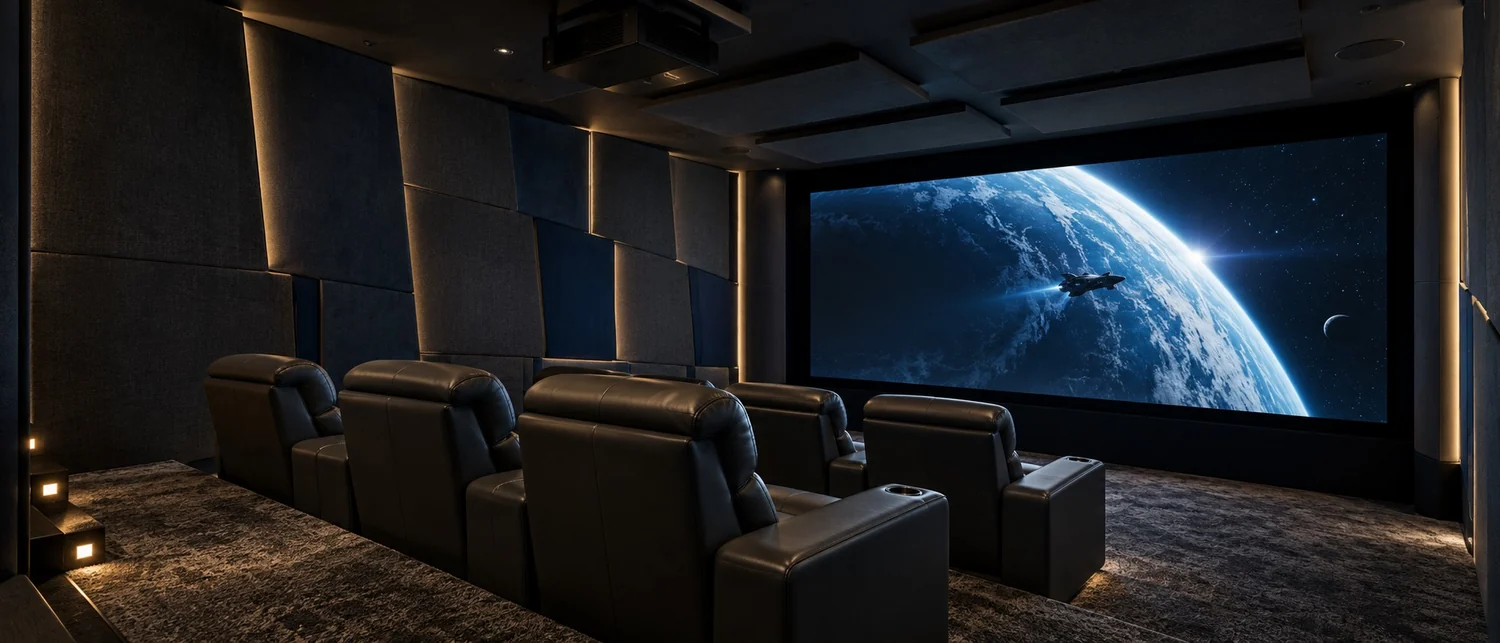
Before any gear, there is the room, because the room is the one component you cannot swap later. Dimensions, seating distance, sightlines, and how the walls and ceiling handle sound are decided at framing and are expensive to change after. We treat and correct the space so the sound is even in every seat and the picture has the dark, controlled environment it needs. Everything that follows, the projector, the speakers, the processor, only performs to the room it sits in, so the room is where the budget starts, not where it is trimmed.
The PictureProjector and Screen, Matched
The image is a pair, never a single box: a projector matched to a screen matched to the room. We specify JVC and Sony for their native-contrast laser engines when deep blacks and a dark room are the priority, and Epson’s laser projectors where brightness and value carry the room. The screen is the other half of the decision: a Screen Innovations Zero Edge fixed frame, with a bezel that all but disappears, for a dedicated theater, and an ambient-light-rejecting material for a room that sees daylight. Gain, size and throw are calculated for the seats, because a great projector on the wrong screen is just an expensive light.
The ProcessorGetting the Picture Right
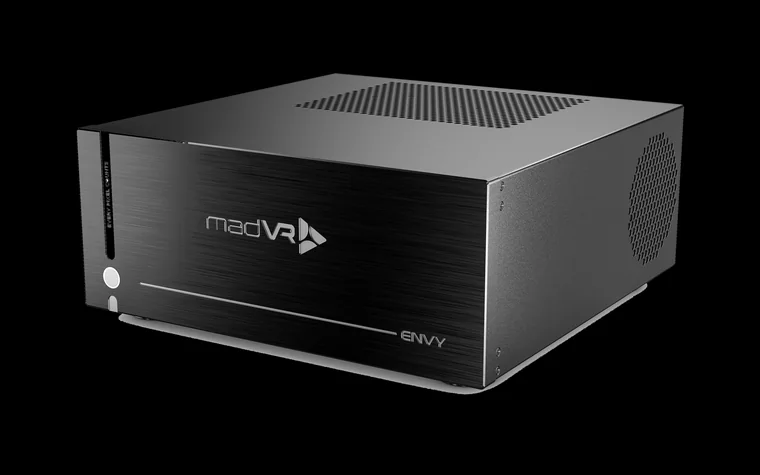
A projector shows what it is fed, and most content is not mastered for your particular screen and room. A madVR Envy sits between source and projector and remaps every frame in real time: tone-mapping HDR to your screen’s actual capability, cleaning up motion and compression, and holding detail in the shadows and highlights that would otherwise be crushed or blown out. It is the difference between a picture that is merely bright and one that is correct. In a reference theater it is not an upgrade; it is the component that lets the projector and screen show everything they can.
Or Skip the BeamDreamWall
Projection is not the only way to the biggest picture. When a client wants reference brightness with the lights up, or a wall that doubles as art between films, a DreamWall microLED makes its own light and becomes the entire end wall: no projector, no screen to drop, no dark-room requirement. It is the premium alternative to projection for a media room that has to do more than screen movies, and we scope it the same way, sized to the wall, to the seats and to how the room is actually used.
The SoundFocal, Front to Back
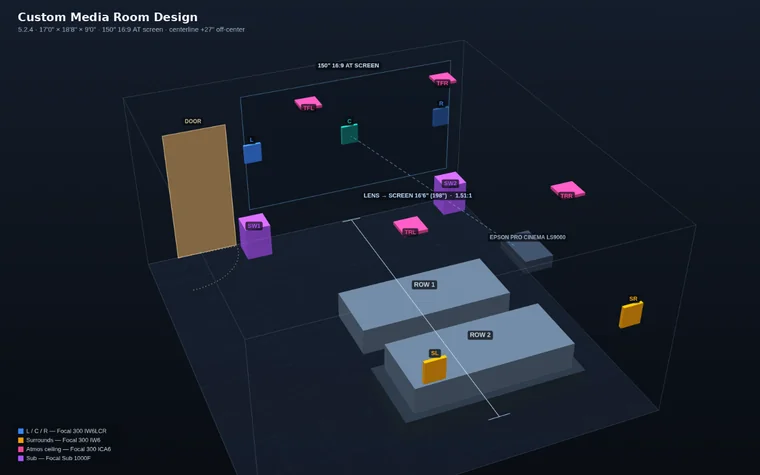
Half of cinema is sound, and we build the whole field in Focal: the front three behind an acoustically transparent screen, in-wall and in-ceiling surrounds for a full object-based layout, and subwoofers sized to pressurize the room evenly. Matching the speakers across the room matters more than any single model. Tonal consistency is what lets a sound travel around you without a seam, so an effect that pans overhead and behind arrives as one continuous thing, from the screen to the back row. Chosen and placed as a set, the system disappears and the soundtrack simply surrounds you.
The BrainsMarantz Separates
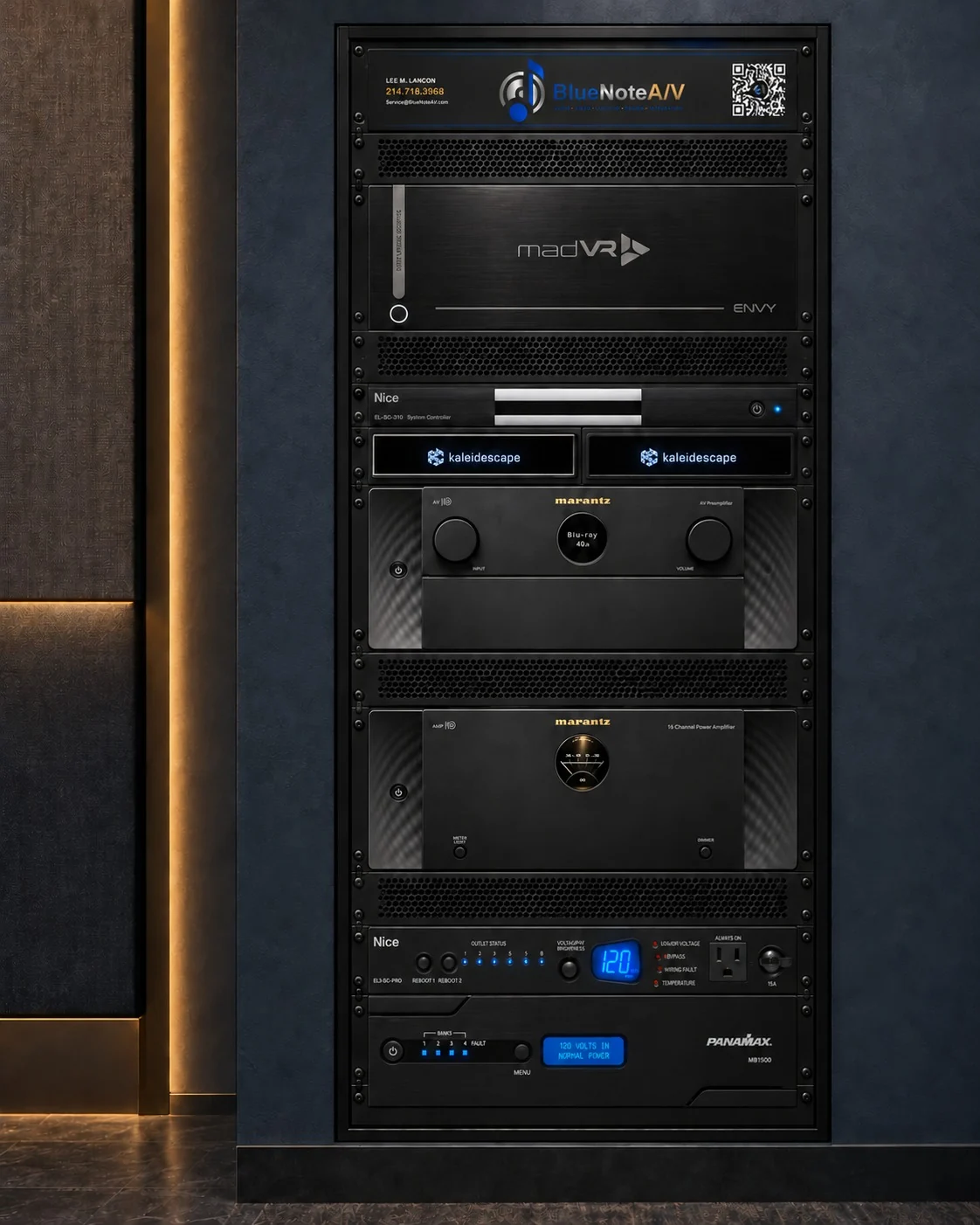
Driving all of it takes real electronics, so we specify Marantz separates, the AV 10 processor and AMP 10 amplifier, rather than a single receiver trying to do both jobs. Splitting processing from amplification keeps the signal clean and gives every channel the power it needs without strain, which is what keeps a complex scene composed instead of congested. It is also built to last and to be serviced, so the heart of the theater is a long-term investment, not something to replace in a few years when the format changes. Separates also leave room to grow, so adding channels later does not mean starting over.
The SourceKaleidescape
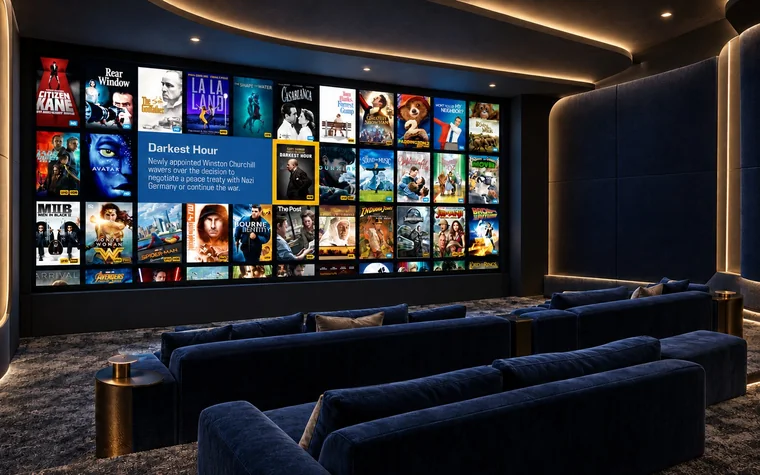
Feed a reference system a compressed stream and you have wasted the room. Kaleidescape is the source we build theaters around: a movie server that stores and plays films at the quality they were mastered in, reference-grade picture and the original lossless soundtrack, owned outright and on screen in seconds. It is the one component that gives the projector, the processor and the speakers something worthy of them, and it is as much a pleasure to use as it is to watch, with your collection laid out as a wall of cover art.
One ButtonELAN Control
A theater no one can operate is a failure, however good it sounds. We program the whole chain into an ELAN control system so a single button dims the lights, drops or wakes the screen, fires the projector, selects the source and sets the volume: one press, every time, for anyone in the family. The complexity underneath is real; the experience on top is a remote a guest understands in a moment. Making a roomful of serious equipment feel effortless is the last and least visible part of the build, and the one clients notice most.
| Link in the Chain | What We Specify | Why It Is Chosen |
|---|---|---|
| The room | Treatment and correction, decided at framing | The one component you cannot swap later |
| Picture | JVC or Sony laser projection, Epson where brightness and value lead; Screen Innovations screen matched to the room | A projector and screen are one decision, not two |
| Processor | madVR Envy | Makes the picture correct, not merely bright |
| Alternative | DreamWall microLED | Reference brightness with the lights up, no projector |
| Sound | Focal, front three to surrounds to subwoofers | Tonal match across the room, so effects travel without a seam |
| Brains | Marantz AV 10 and AMP 10 separates | Clean signal, real power, serviceable for years |
| Source | Kaleidescape | Films at mastered quality, owned, not streamed |
| Control | ELAN | One button for anyone in the family |
Build it as one system, tune it as one system, and the technology disappears. What is left is the movie.— Blue Note A/V
Designed as OneWhy the Chain Holds
None of these parts are chosen alone. The screen is picked for the projector, the processor for the screen, the amplifier for the speakers, the source for all of it, and the control system to hide the seams; then the whole chain is calibrated to the room it lives in. That is the real work of a theater, and the reason the same equipment performs better in a room we finished than it ever would in boxes. Build it as one system, tune it as one system, and the technology disappears. What is left is the movie, exactly as it was meant to be seen and heard.
Build the whole chain
Tell us about the room, or the one on the drawings, and we will walk you through the chain from screen to seat.
Start with the free call