You can spend a fortune on speakers, electronics and subwoofers and still be let down by the one component nobody shops for: the room. Every room imposes its own signature on the sound, bass that booms or disappears, reflections that smear detail, a decay that blurs one note into the next, and no amount of great gear overrides it. The good news is that a room is fixable, with two tools that do different jobs. Physical acoustic treatment handles the problems that are physical, and digital correction with Dirac cleans up what is left. Used together, in the right order, they are the difference between expensive and extraordinary.
The RoomUsually the Weak Component
The room is the first component, not the last: the one to get right before you spend on anything else, because it shapes everything the speakers do. Below a few hundred hertz, the room’s dimensions create modes, standing waves that pile bass up in some spots and cancel it in others. Above that, every hard surface throws reflections that reach your ears a few milliseconds behind the direct sound and confuse it. And the whole space has a decay time, how long sound lingers before it fades. In an untreated room you hear all of that as much as you hear the speakers. Get the room right first, and the system you already own sounds like a better one.
Bass TrapsTaming the Low End
Bass is where rooms do the most damage, and bass traps are the highest-leverage fix. Low-frequency energy piles up in the corners, which is exactly where traps go to absorb the room modes between roughly 40 and 200 hertz, the booms and the dead spots. The effect is measurable: proper corner trapping shortens bass decay dramatically, and the change on a kick drum or a low synth line is not subtle. Notes start and stop cleanly instead of smearing together. This is also the kind of problem EQ cannot solve. A deep null, where the room cancels a frequency outright, cannot be turned back up; it can only be treated or placed around.
AbsorptionThe Reflections EQ Cannot Fix
Above the bass region, the enemy is early reflections: sound bouncing off the side walls and ceiling and reaching you just behind the direct sound, which smears imaging and clarity. The fix is broadband absorption at the first-reflection points, found with a simple trick. Have someone slide a mirror along the wall, and wherever you can see a tweeter from the listening seat, that spot gets a panel. A ceiling cloud above the listening position does the same overhead. This matters because reflections are a timing problem, not a frequency one, and timing is precisely what digital EQ cannot repair. Treat the reflections and the soundstage snaps into focus.
DiffusionKeeping the Room Alive
The goal is not a dead, anechoic room; that sounds as wrong as a boomy one. Diffusion is the counterweight. Instead of absorbing sound, a diffuser scatters it, breaking up reflections while keeping the energy and the sense of space in the room. The usual home for it is the rear wall, with enough distance for the scattered sound to develop before it reaches you. Done right, diffusion is what lets a treated room stay lively and three-dimensional rather than sucked dry, the difference between a studio and a room you actually want to sit in.
Treatment as DesignMaking It Disappear
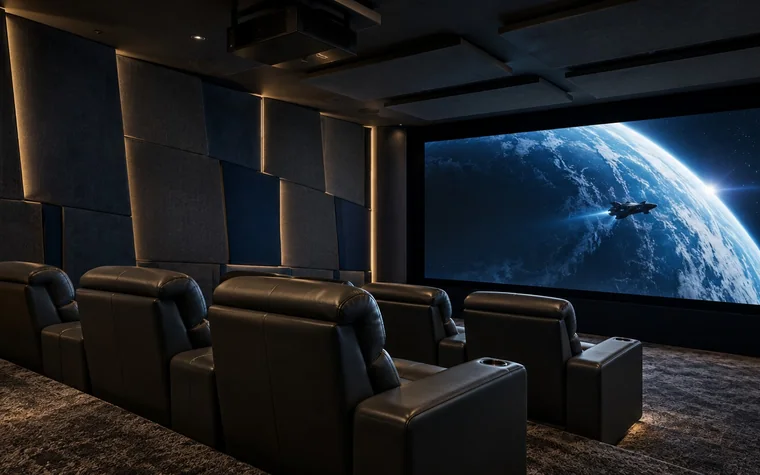
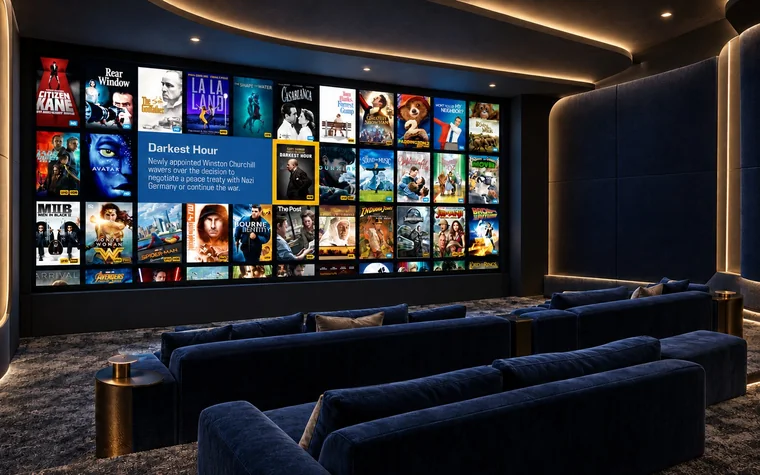
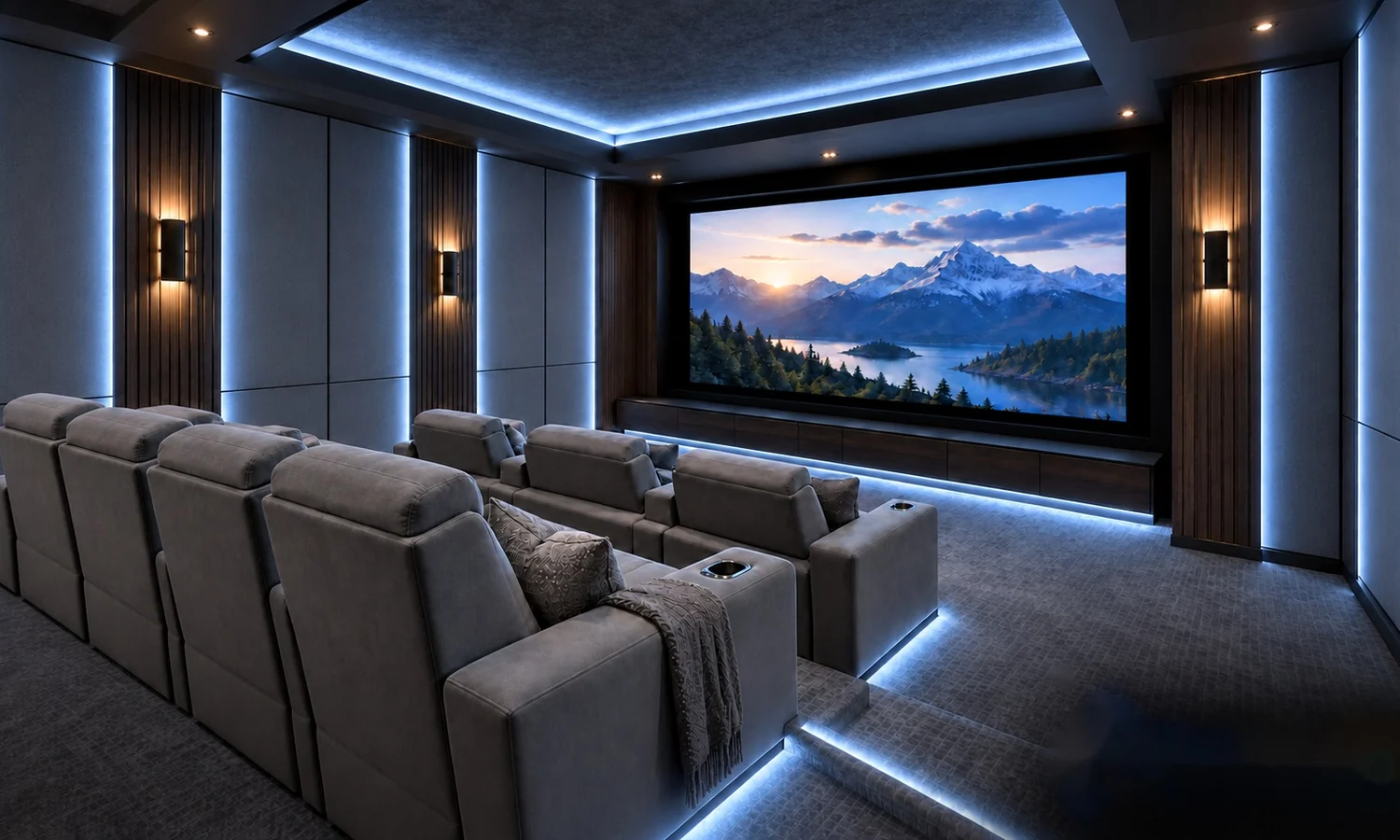
None of this has to look like a recording studio, and in the homes we work in it never does. Absorption hides behind fabric-wrapped panels and upholstered walls; bass traps tuck into corners, soffits and the structure itself; diffusion can be built into millwork and ceilings so it reads as architecture. The acoustics do their job without the room announcing that it has been treated. This is most of the craft in a dedicated theater or listening room: getting the performance of a treated space while keeping it a beautiful room, not a lab.
DiracCorrecting What Is Left
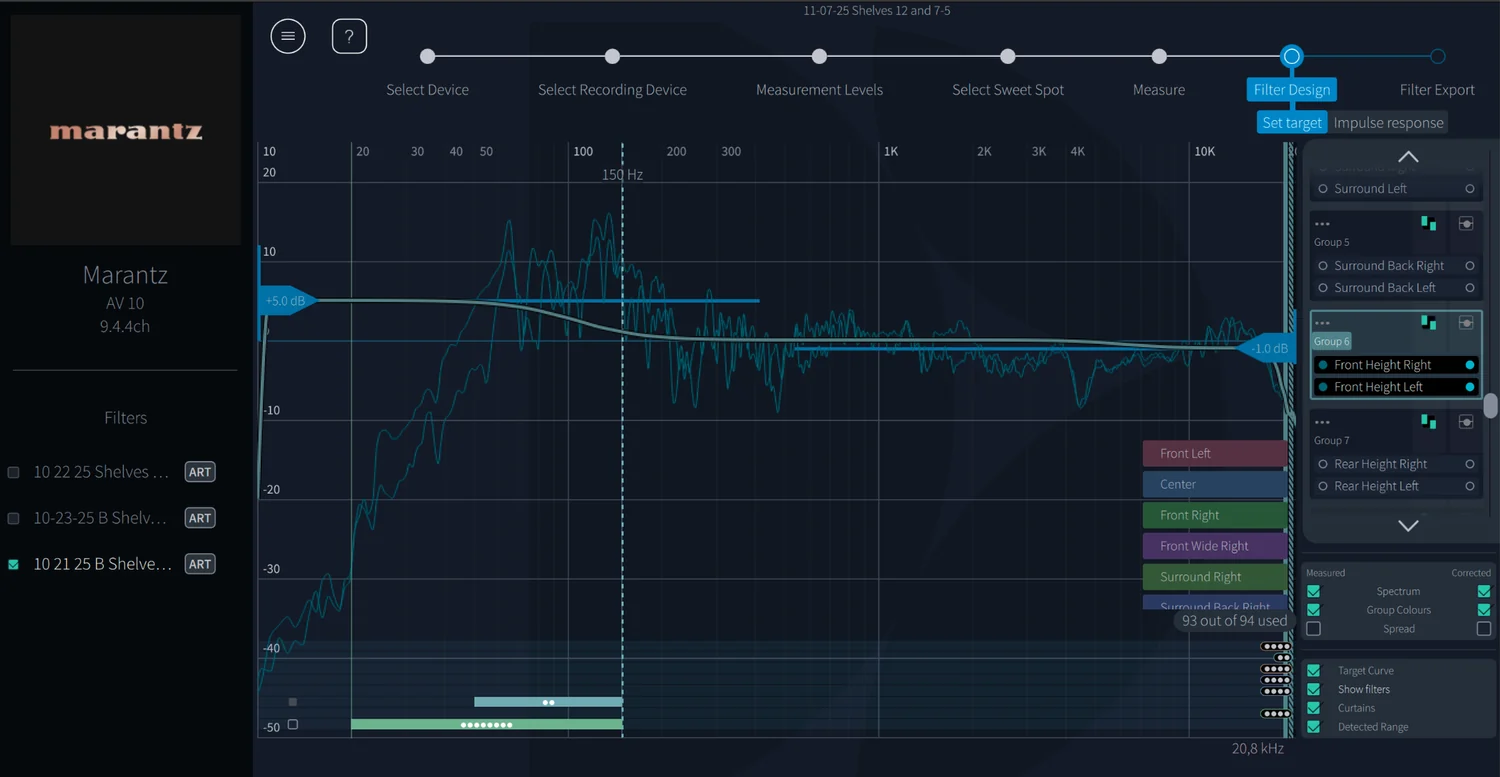
Once the room is physically treated, digital correction earns its place. Dirac Live measures the system and corrects both frequency response and timing with far more precision than older room-EQ tools, and it does it across the whole seating area rather than one chair. Dirac Live Bass Control ties multiple subwoofers together as a single system, and Dirac Live Active Room Treatment goes further, using every speaker in the room to actively cancel the resonances that remain. It is built into the Marantz and Denon processors we specify, and into dedicated cinema processors from StormAudio and JBL Synthesis. Treatment fixes the physics; Dirac polishes the result.
The OrderTreat, Then Correct
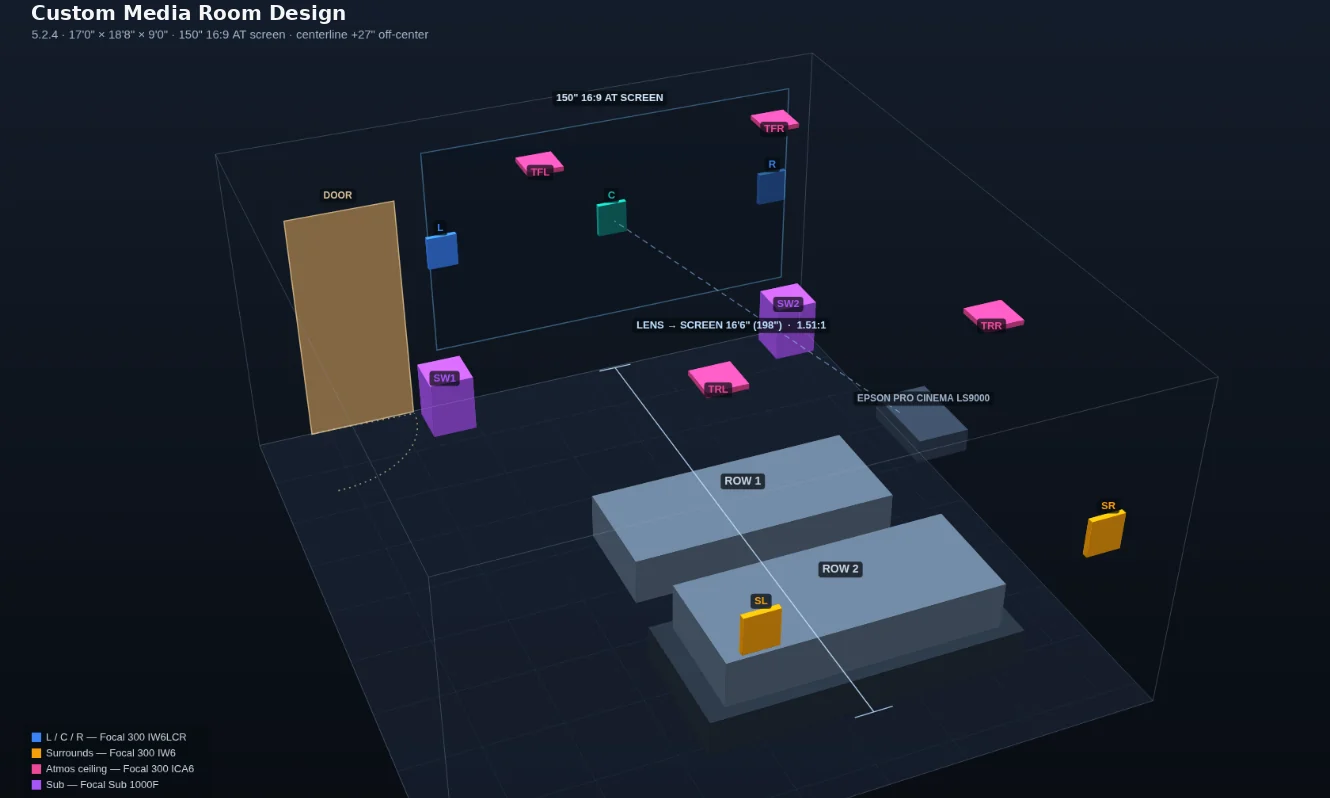
Sequence is everything, and it is where do-it-yourself attempts usually go wrong. We start with speaker and seat placement, which is free and fixes more than people expect. Then corner bass traps, then absorption at the reflection points, then diffusion, and only then Dirac, to correct what is left. Doing it in that order compounds the gains; doing it backward asks EQ to paper over problems it physically cannot touch. The two are not alternatives, and no plug-in replaces a bass trap. They are partners. Panels do what DSP cannot, DSP does what panels cannot, and the room ends up right.
| Step | What It Fixes | Where It Goes |
|---|---|---|
| Placement | Speaker and seat positions relative to the room modes; free, and the biggest single gain | Decided in the model before anything is bought |
| Bass traps | Modes from roughly 40 to 200 Hz, the booms, the nulls and the long bass decay | Corners, soffits and the structure itself |
| Absorption | Early reflections that smear imaging and clarity, a timing problem EQ cannot touch | First-reflection points on the side walls, and a cloud overhead |
| Diffusion | Keeps the room lively and three-dimensional instead of dead | The rear wall, built into millwork or ceilings |
| Dirac Live | Frequency and timing correction across every seat, Bass Control for the subs, ART for what remains | Last, on the processor, once the room is treated |
MeasurementWe Measure, We Do Not Guess
The reason this works in practice and not just on paper is that we measure the room rather than trust our ears or a spec sheet. A calibrated microphone and software show us the actual mode peaks, the nulls, the decay time and where the first reflections land, before a single panel goes up and again after. That tells us how many bass traps a corner really needs, and whether a null is one treatment can help or one only placement will cure. It also sets realistic expectations: we show the before and after, so the improvement is something you can see, not just something we claim.
Panels do what DSP cannot, and DSP does what panels cannot. Treat first, correct second, and the room ends up right.— Blue Note A/V
The FitWho It Is For
This is for the client who has invested in a real system, a dedicated theater, a two-channel listening room or a serious great room, and wants to hear what they actually paid for. A purpose-built room gets the full treatment, designed in from the studs; an existing room gets discreet treatment and Dirac tuned to what is there. Either way, the room is the highest-value upgrade left once the gear is good, and the one almost no one thinks to make. Get it right and everything you own sounds better, without buying a single new box.
Let us look at the room
Tell us about the space and what it plays, and we will tell you what the room is doing to the sound, what to treat, and what Dirac can finish.
Start with the free call