Most television brands are trying to make a picture that looks good in a bright store. Sony is trying to make the picture the director saw. The company builds the cinema cameras the films are shot on and the reference monitors they are graded on, and the same picture engineers tune the Bravia in your living room and the projector in your theater. The result is a house style: accurate rather than loud, and the reason a Sony is the display we default to when the room is built around watching.
True RGBThe 2026 Televisions
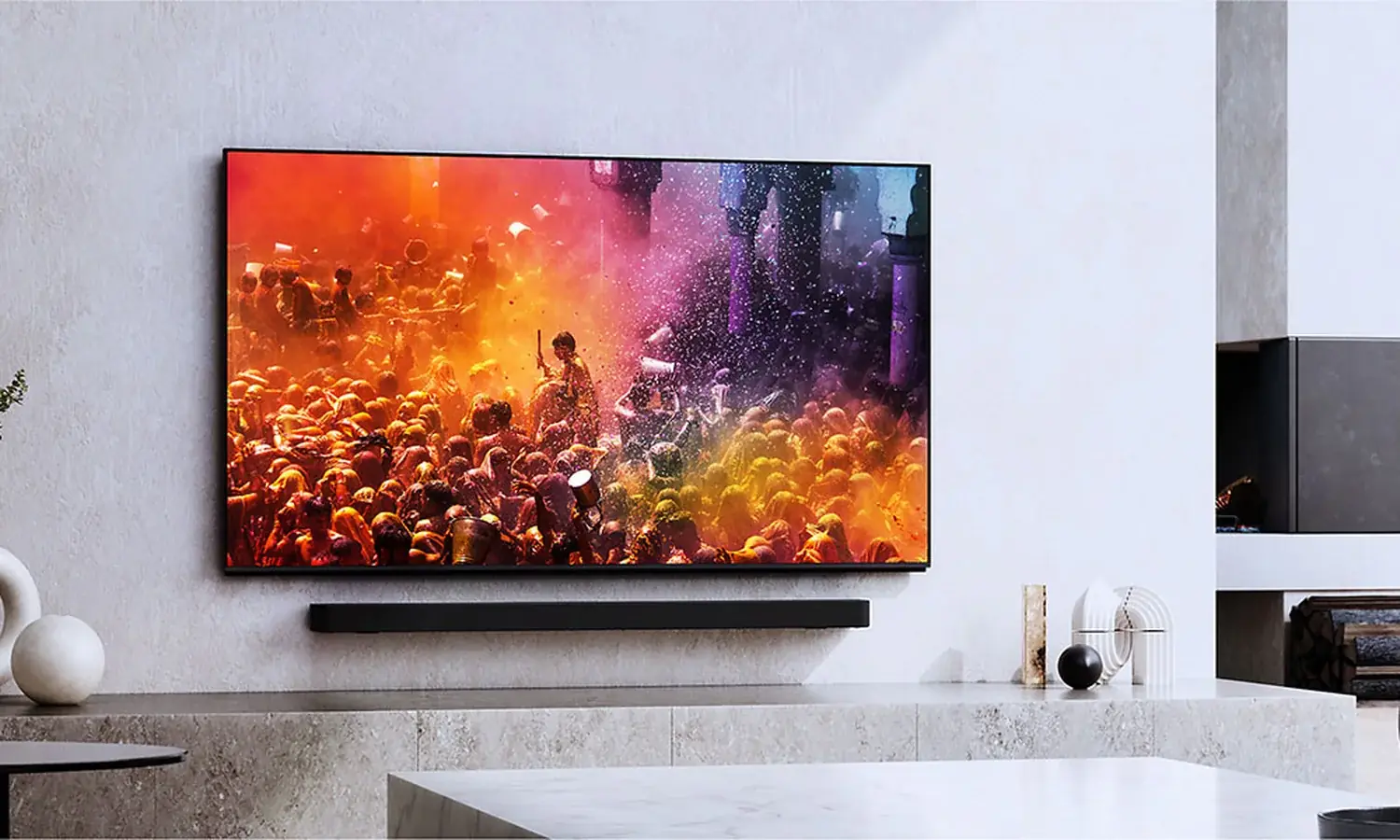
This year's news is True RGB. Where a conventional mini-LED backlight is white light filtered into color, Sony's new panels are lit by individually controlled red, green and blue LEDs, which gives them color purity that used to be OLED's alone and brightness OLED cannot reach. The Bravia 9 II is the flagship, in 65 to 115 inches; the Bravia 7 II brings the same technology down to 50 inches and a price most media rooms can carry. Both run Sony's XR processor, which is the part that makes a streamed film look like a film.
Below them, the Bravia 5 is the mini-LED value, and the Bravia 3 II and 2 II are the sensible sets for a bedroom or a gym — the 3 II notable for four HDMI 2.1 inputs, which almost nothing at its price has.
Side by side, the Sony is the one that looks less like a television. That is the compliment.— Blue Note A/V
OLEDBravia 8 II and Bravia 8
For the room where the lights go down, OLED still wins on black, and Sony's are the ones we pick for the picture rather than the spec sheet. The Bravia 8 II is the QD-OLED flagship in 55 and 65 inches; the Bravia 8 is the conventional OLED in 55, 65 and 77. Sony's Acoustic Surface makes the screen itself the speaker, which matters less to us than to most — we put real speakers in the wall — but the processing is the same XR that makes the top of the range, and it shows in motion and in skin.
Bravia ProjectorsWhat the Dedicated Room Is For
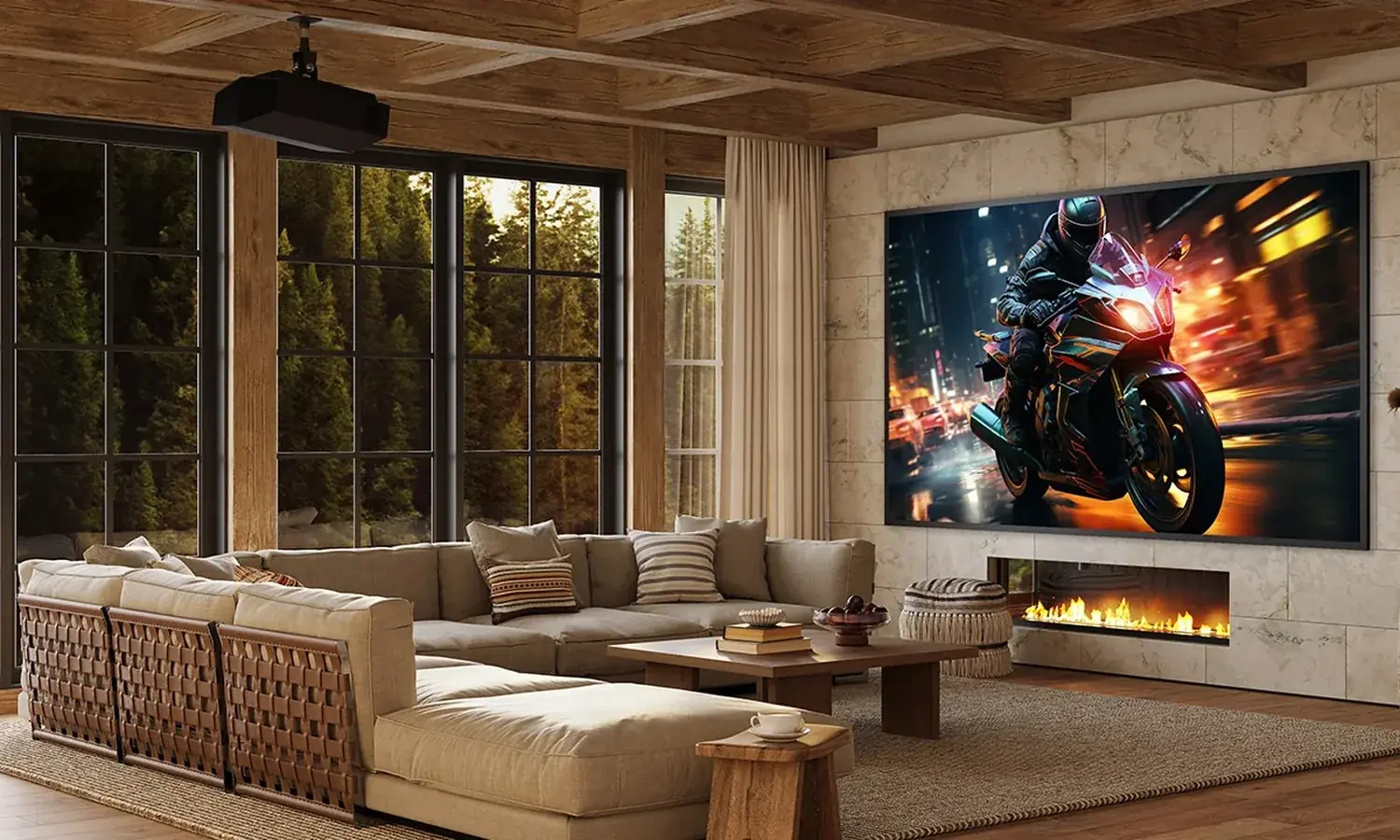
This is where Sony is not just a choice but the choice. Three native-4K laser projectors, all built on Sony's SXRD imaging chips with a 20,000-hour light source and the same XR processing as the televisions: Bravia Projector 7 at 2,200 lumens and $9,999, the newest and the one that made a Sony theater attainable; Bravia Projector 8 at 2,700 lumens and $15,998; and Bravia Projector 9 at 3,400 lumens and $31,998, the reference. All three take 4K at 120 frames over HDMI 2.1 for the room that games as well as watches.
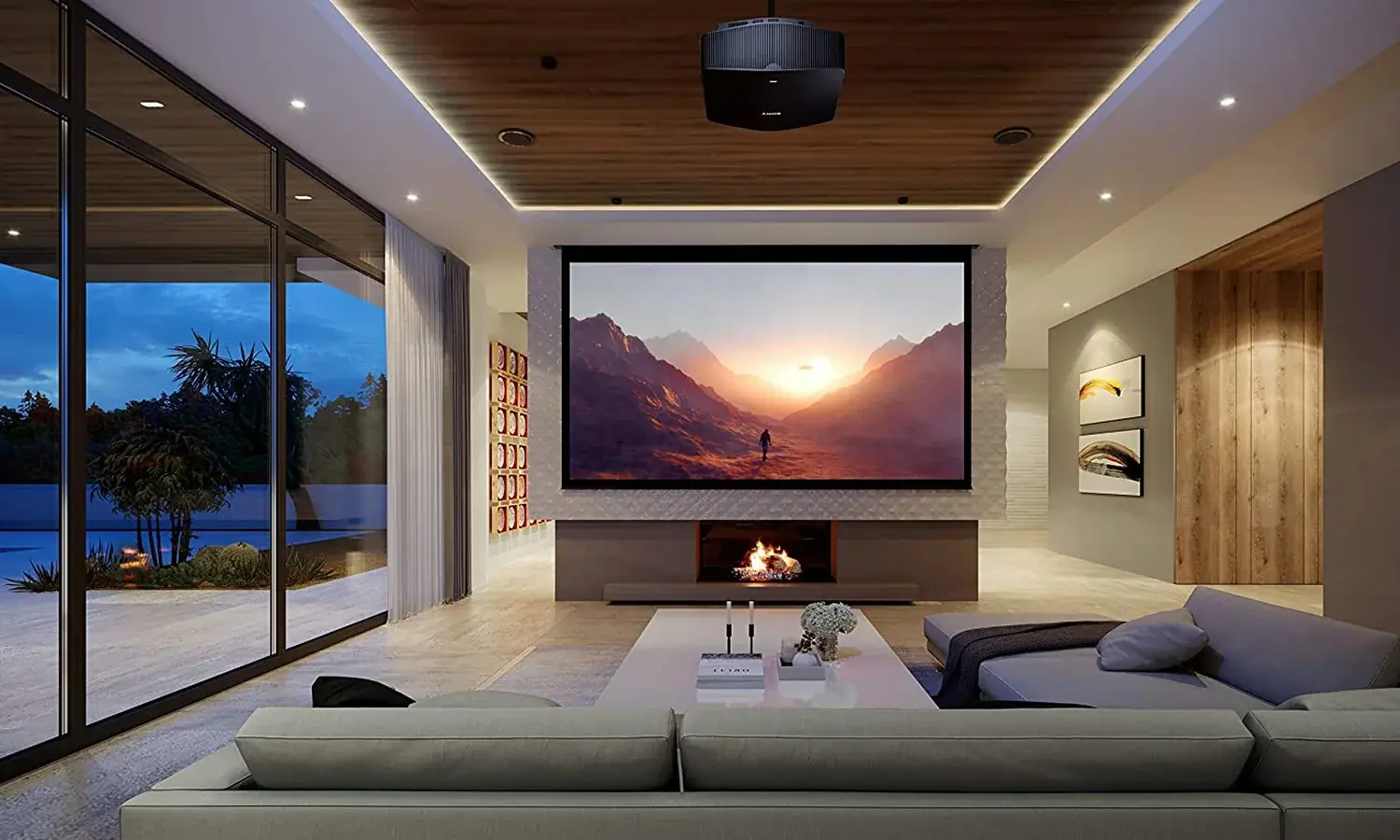
XR Dynamic Tone Mapping handles HDR frame by frame, which is the difference between a projector that looks dim on bright films and one that does not. For the rooms that want more — a bigger screen, a wider format, the last measure of contrast — we pair a Sony with a madVR Envy in front of it, and the two are the heart of most of our dedicated theaters.
At a GlanceSony as We Install It
| Line | What It Is | Where It Belongs |
|---|---|---|
| Bravia 9 II | True RGB mini-LED flagship, 65 to 115 in. | The bright living room that wants the best picture |
| Bravia 7 II | True RGB mini-LED, 50 to 98 in. | Media rooms; the value in the new range |
| Bravia 8 II · Bravia 8 | QD-OLED and OLED | Rooms that dim the lights |
| Bravia 5 · 3 II · 2 II | Mini-LED and LCD | Bedrooms, gyms, the kitchen |
| Bravia Projector 7 / 8 / 9 | Native 4K SXRD laser, 2,200 to 3,400 lumens | The dedicated theater, with or without madVR |
The Real WorldWho It's For
Sony is for the client who watches films and knows what they are supposed to look like. It is not the brightest television in a store demo and does not try to be; in a room, calibrated, it is the one that disappears. On the projector side there is no argument to have: for a dedicated room with proper light control, the three Bravia Projectors are what we build around, with the 7 making a serious theater possible at a price that did not exist two years ago. Every Sony we install is calibrated and the numbers are kept on file, which is the part that turns a good display into the right one.
Why Sony
- The picture the film was graded on, from the company that made the cameras
- True RGB: OLED color with mini-LED brightness, new for 2026
- Native-4K laser projectors at three prices, all with XR
- HDMI 2.1 and 4K/120 across the line
Things to know
- Not the brightest set in the showroom; accuracy is the point
- The projectors need a dark room to earn their price
- Calibration is where the last twenty percent lives
The display for the room built around watching
In the living room Sony is one very good choice among a few. In the theater it is the one we reach for first, and the Bravia Projector 7 has made that theater available to more houses than ever. Either way, what you are buying is the same thing the filmmakers bought: the picture, as intended.
Best for: Dedicated theaters and media rooms where the film matters more than the demo.
Building a room around a Bravia Projector?
Tell us the room and the seating distance and we will size the screen and pick the projector. Bring a film you know when it is time to decide.
Start the Conversation