For years the best picture money could buy was one you could not actually put in a house. Direct-view microLED, the seamless wall-sized image behind stadium scoreboards and corporate lobbies, ran hot, cost a fortune and was built for commercial rooms. DreamWall exists to change that. Launched in 2025 by the people who built one of the largest custom-integration distributors in the country, it takes the same wall-of-light technology and engineers it to live in a home: cooler, quieter, sized to the room, and priced for a real project rather than a trophy. It is the big screen without the usual compromises.
What It IsA Wall, Not a TV
Start with what DreamWall actually is, because it is not a television. It is a direct-view microLED video wall: thousands of tiny LEDs built onto chip-on-board panels that assemble into a single seamless surface, with no bezel, no backlight and no projector. That construction is why it looks the way it does, with true blacks, enormous brightness and an image that holds up with the lights on. And because it is built from panels rather than cut from one sheet of glass, it is not locked to 65 or 85 inches. A DreamWall is sized to the wall it goes on, which is a different way of thinking about a screen.
CooLEDWhy It Can Live in a Home
The reason microLED stayed in commercial rooms for so long is heat. A wall of LEDs throws off warmth, and the usual answer, extra ventilation and active cooling, is fine in an equipment closet and wrong in a living room. DreamWall’s answer is its CooLED architecture, which manages heat at the source so the panels stay cool to the touch and draw about fifty watts per cabinet at full output, with no supplemental HVAC. It sounds like an engineering footnote. It is the whole unlock: it is what lets a video wall sit in a great room or a bedroom and behave like part of the house rather than a piece of equipment.
The PictureA Good Seat in Any Light
What a wall like this buys you is an image that does not back down. Direct-view microLED makes its own light pixel by pixel, so blacks are black and highlights are bright enough to shrug off a wall of windows, helped by an anti-glare matte finish that keeps contrast intact in a sunlit room rather than washing out at ten in the morning. There is no projector lamp to dim, no viewing-angle falloff, no hotspot. Everyone in the room sees the same picture, in the light the room actually has, which is exactly what a projector in a bright space cannot promise.
The question with a projector is always what time of day you plan to watch. With a microLED wall there is no such question.— Blue Note A/V
Built to LastA Fixture, Not an Appliance
A screen this size becomes architecture, so it has to be built like it. DreamWall’s surface is impact- and dust-resistant, the panels are rated for 100,000 hours, decades of normal viewing, and the system carries a five-year warranty. Because the picture is assembled from cabinets, it can be serviced panel by panel rather than replaced whole. These are the specifications that matter for something permanently mounted in a home: not how it looks in a dark demo, but how it holds up as a fixture people live with, in daylight, for years, without babying it.
Sized to the RoomWhere It Belongs
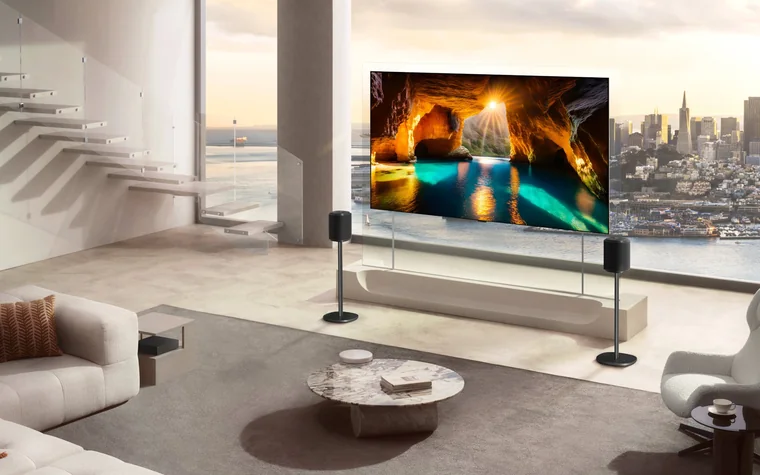
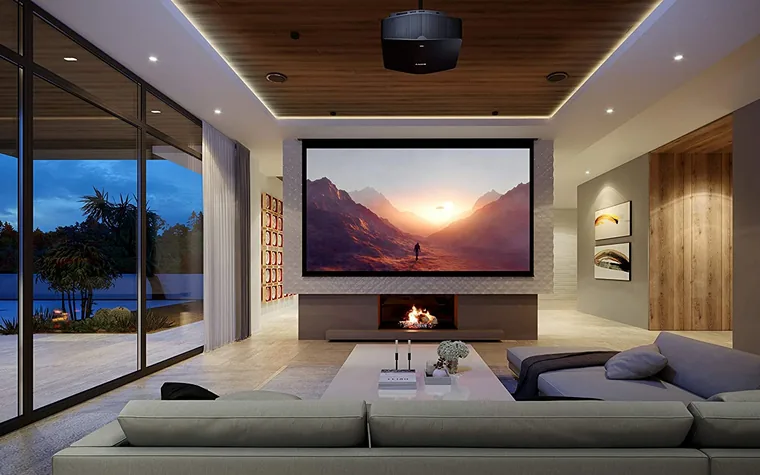
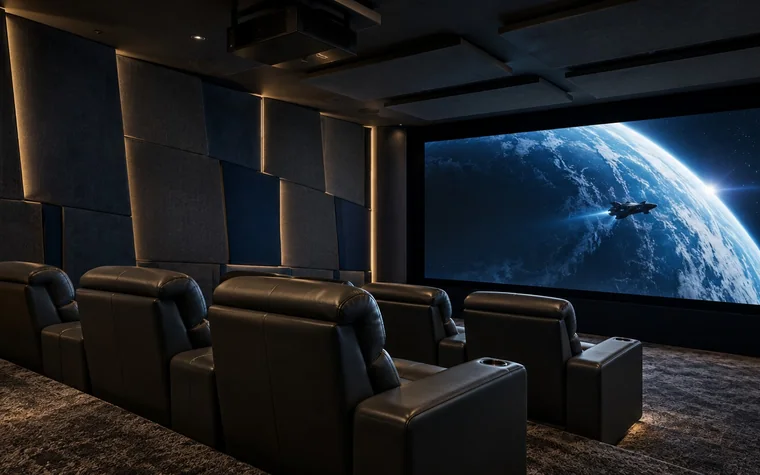
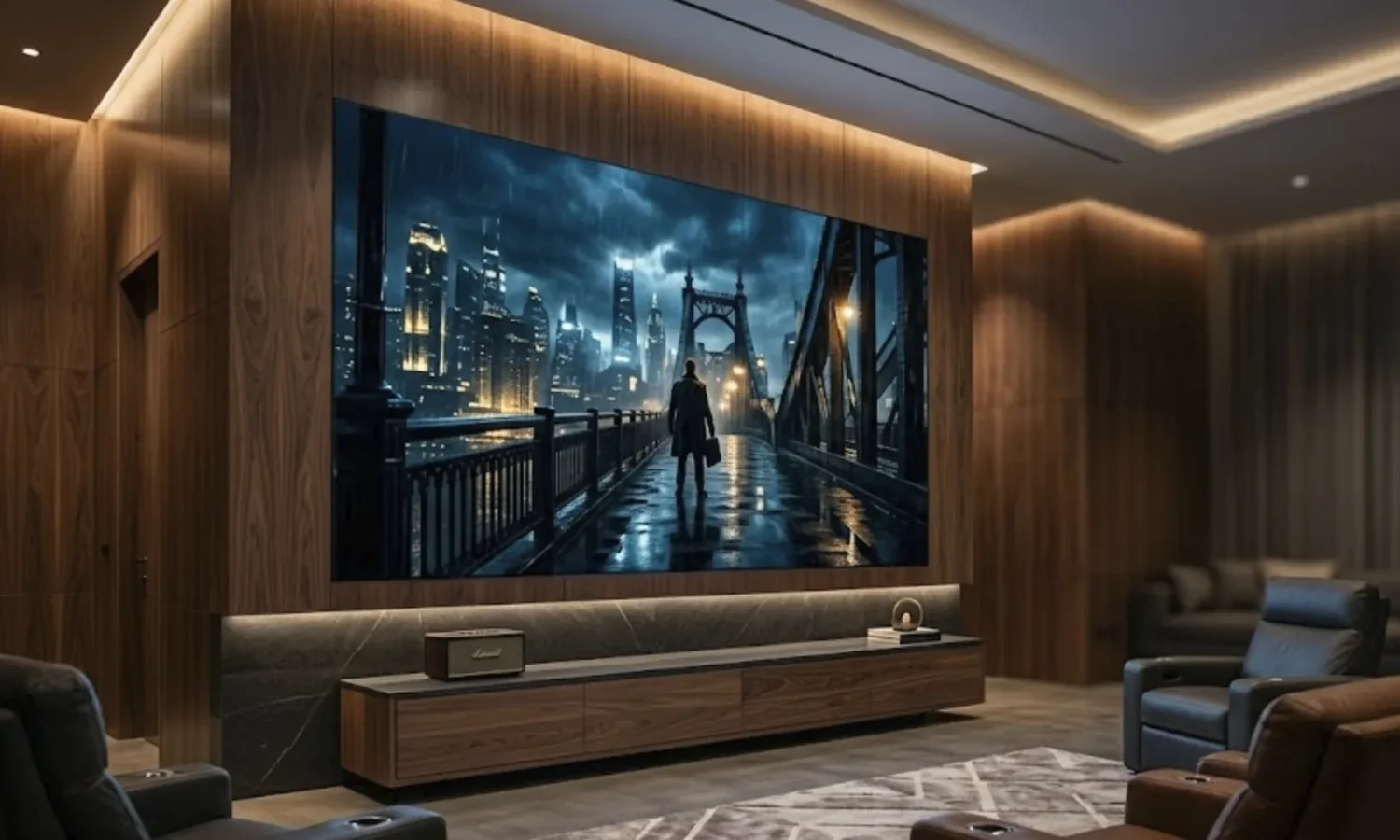
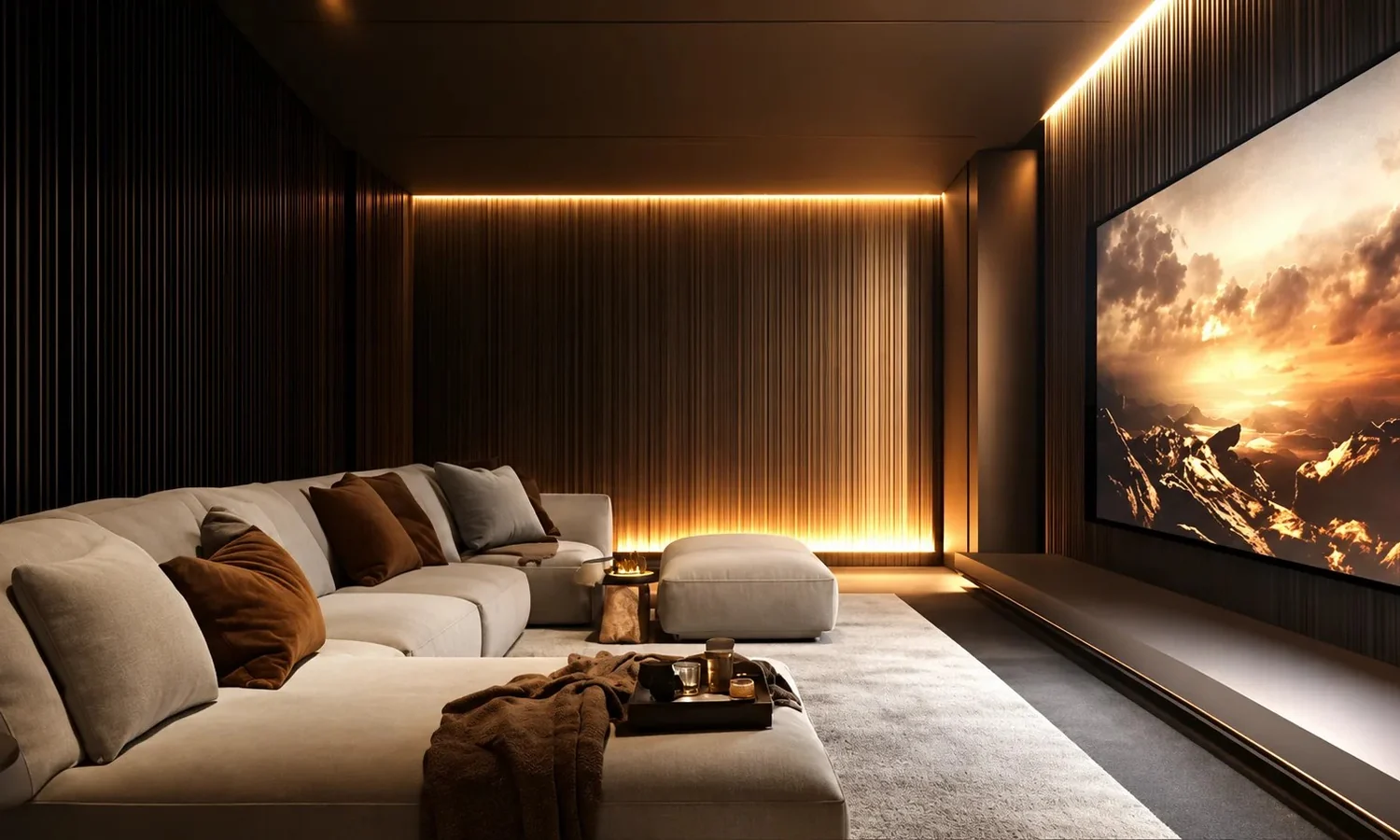
Because a DreamWall is configured rather than bought off a shelf, its natural home is a wall a television can only apologize for. In a great room it becomes the feature wall: a true cinema-scale image across the end of the room or above the fireplace, sized so the proportion is right rather than a black rectangle floating in drywall. In a dedicated theater it replaces the projector and screen with a brighter, sharper picture that never needs the lights off. It belongs where the room is the point, in the spaces clients show people, where the screen is meant to be part of the design rather than hidden behind a lift.
Two Walls in OneCinema and Art
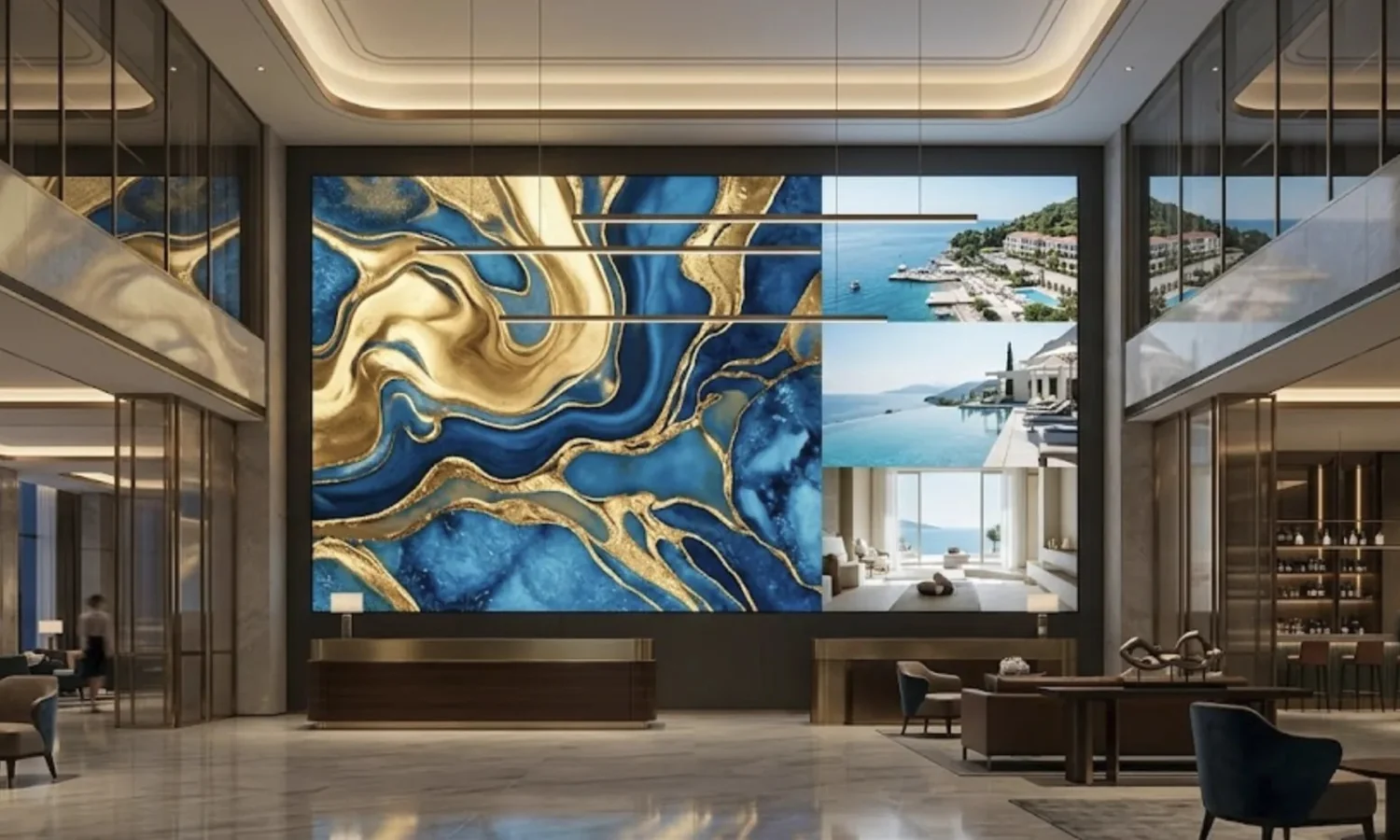
The other thing a wall this good does is become something else when it is off. DreamWall is built for cinematic entertainment first, movies, the game, concert films at a scale a television cannot touch, but the same surface runs dynamic digital art, so the feature wall turns into a gallery when no one is watching a film. It can also carry the smart home: a quiet dashboard of cameras, the weather and the day ahead, or a single image on the wall. One surface doing the job of a screen, a piece of art and a hub, depending on the moment.
The People Behind ItWhy It Is Attainable Now

What makes DreamWall interesting is not only the technology but who is behind it. It was founded by Gary Wermuth, who built WAVE Electronics into one of the largest custom-integration distributors in the country before it sold, with his son Noah Meicler running the company as president. That matters because DreamWall is sold only through integrators, never direct to consumers, and is designed around supporting the people who install it. For a client it means a video wall that is specified, delivered and stood behind by a dealer rather than shipped in a box, and microLED priced for a real home project. In its first year it has already taken best-of-show and technology honors at CEDIA and InfoComm 2026.
At a GlanceDreamWall as We Would Place It
| Line | What It Is | Where It Belongs |
|---|---|---|
| CooLED indoor | Chip-on-board microLED cabinets, about 50 watts each, no supplemental cooling | The great room feature wall, the media room |
| Elite Series Platinum P0.7 | The finest pixel pitch in the line; CEDIA 2026 Best of Show | A dedicated theater or a close-seated room |
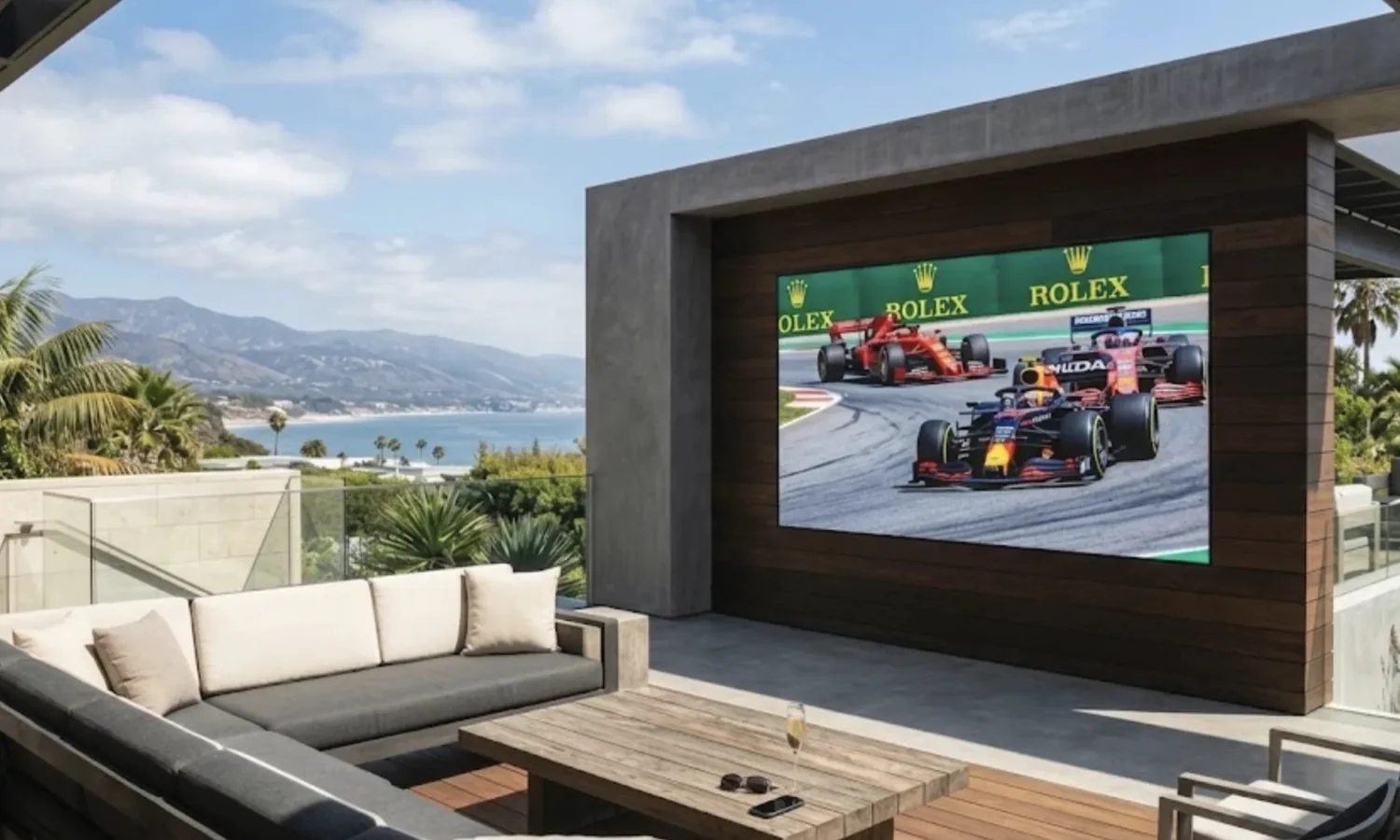
| Outdoor CooLED | High-brightness 16:9 walls built for daylight and weather | A covered terrace or loggia |
| Monarch | A portable microLED display on its own stand | The room that changes with the season |
The Real WorldWho It Is For
DreamWall is for the client building the room they have always wanted, a great room, a theater, a signature space, who wants the best possible picture and wants it to be part of the architecture rather than an appliance bolted onto it. It is more wall than a casual den needs, and it is a considered purchase rather than an impulse one. But for the right room it does something no television can: it turns the screen into the wall itself, cinema when you want it and art when you do not. When a client asks for the best, this is now an answer we can put in their home.
Why DreamWall
- Seamless direct-view microLED, sized to the wall
- CooLED: cool to the touch, no extra HVAC
- Bright enough for a room full of windows
- 100,000-hour panels, five-year warranty, serviceable cabinet by cabinet
- Cinema, art and a smart-home dashboard on one surface
Things to know
- A considered purchase; more than a den needs
- Sold and installed through integrators only
- Plan it early: power, structure and sources are part of the design
The big screen without the usual compromises
MicroLED has been the best picture in the business for years and the least practical to own. DreamWall fixed the part that kept it out of houses, the heat, and built a company around the integrators who install it. For a room where the screen is meant to be the wall, it is the answer.
Best for: Great rooms, dedicated theaters and signature spaces where the picture should be part of the architecture, in any light.
Size the wall with us
Bring the room dimensions or the plans. We will tell you what size the wall should be, where the seating goes, and what it takes to feed it.
Start the Conversation