The most common question we get about Sonos is whether we install it. The second is whether they should have bought it. The answer to both is yes, with a sentence attached. Sonos built the streaming platform that everything else is measured against — every service, one app, any room, and it has worked for twenty years. What it is not is a control system, and what it was never meant to be is the loudspeaker in every ceiling of a large house. Used for what it is good at, alongside the rest of what we do, it is one of the most sensible purchases a client can make.
The PlatformWhy Everyone Knows the Name
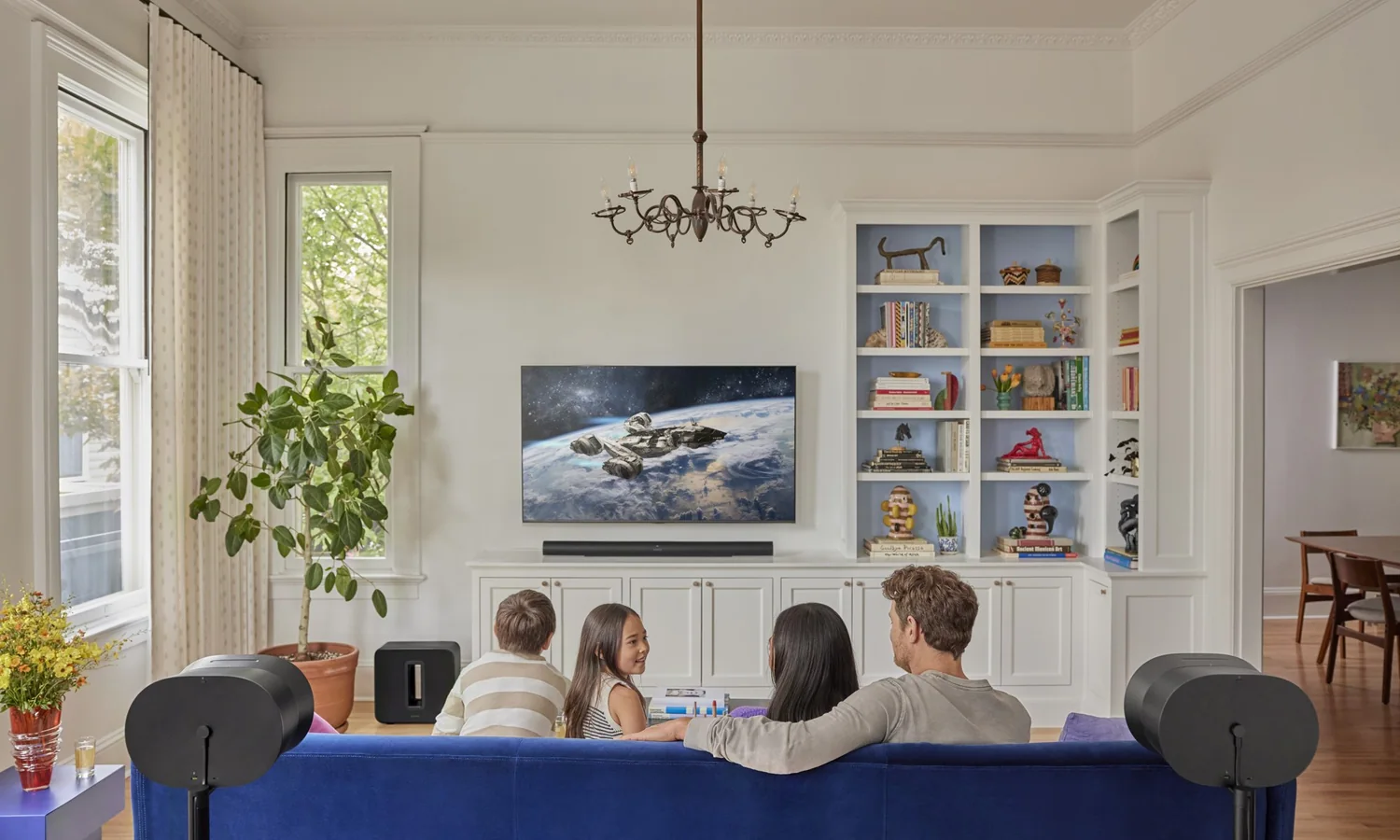
Sonos got one thing right before anyone else: music in a room should be a tap, not a project. Every streaming service in one app, any speaker grouped with any other, the same volume knob in your pocket in every room. The 2024 app rewrite was a rough year for the company and its customers — we lived it alongside our clients — and it has recovered. Today the platform is what it was: the easiest way to have music everywhere that we know of.
What it means for us is that Sonos is often the source, not the speaker. A Sonos Port feeds a whole-house system; a Sonos Amp drives a pair of architectural speakers; the client uses the app they already love, and the house does the rest.
When a client says “I just want it to work like Sonos,” they are describing a standard, not a brand. We can hit it either way.— Blue Note A/V
SoundbarsArc Ultra and the New Beam Ultra
The Arc Ultra is the best soundbar we sell that is not a KEF XIO, and for many living rooms it is the right one. Sonos's Sound Motion driver gives it real bass from a slim bar, it decodes Dolby Atmos as 9.1.4 with a Sub 4 and a pair of Era 300s behind the couch, and it tunes itself to the room with Trueplay. On September 1 Sonos announced the Beam Ultra: nine drivers including two up-firing, true 7.1.2 Atmos from a bar that fits under a 55-inch set, with speech enhancement and night mode, at $699, shipping at the end of September. For the bedroom and the media room off the kitchen, it is going to be the default.
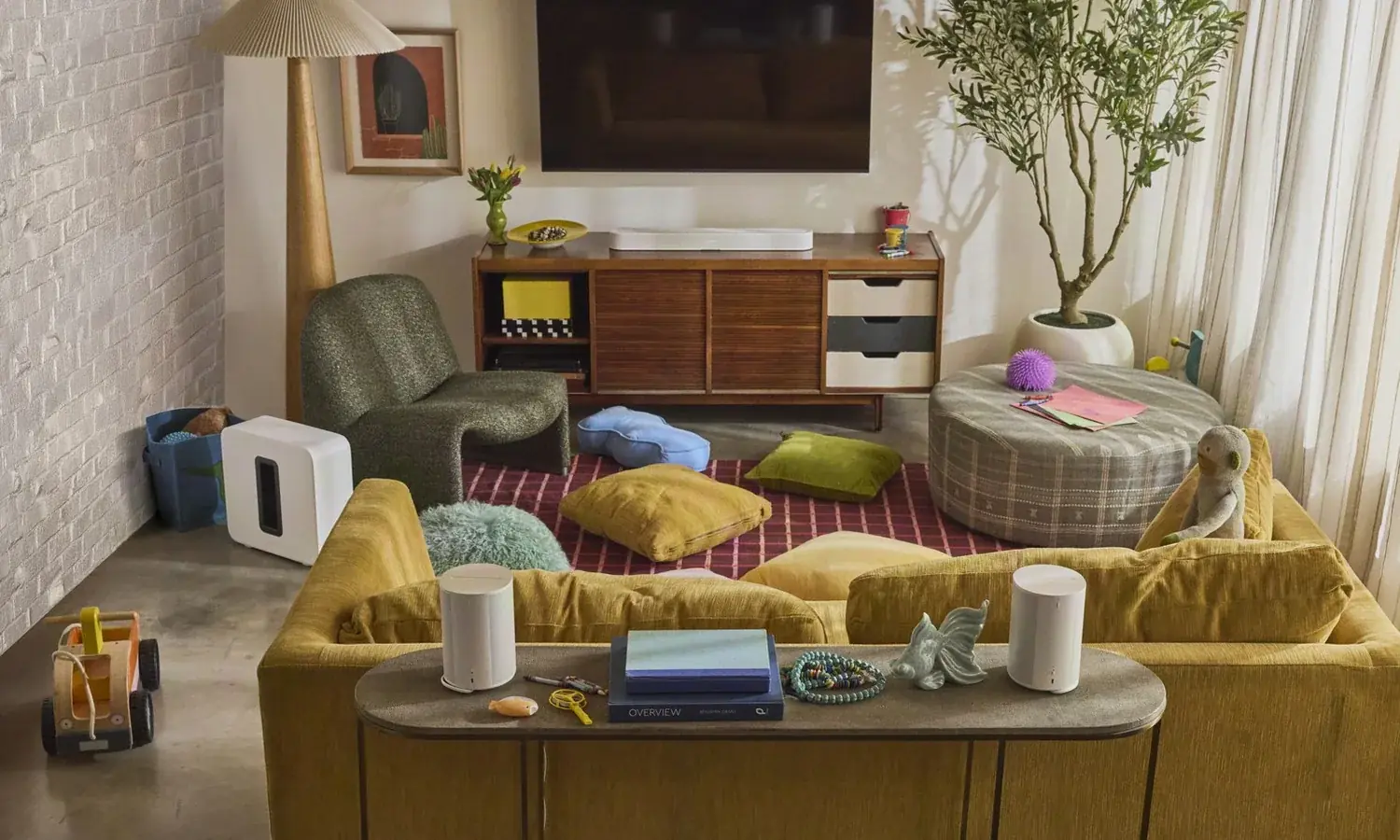
Where we draw the line: a dedicated theater is not a soundbar room, whatever the marketing says. A media room with a 65-inch television and a couch is exactly a soundbar room, and these are the two we reach for.
Amp and ArchitecturalSonos in the Ceiling
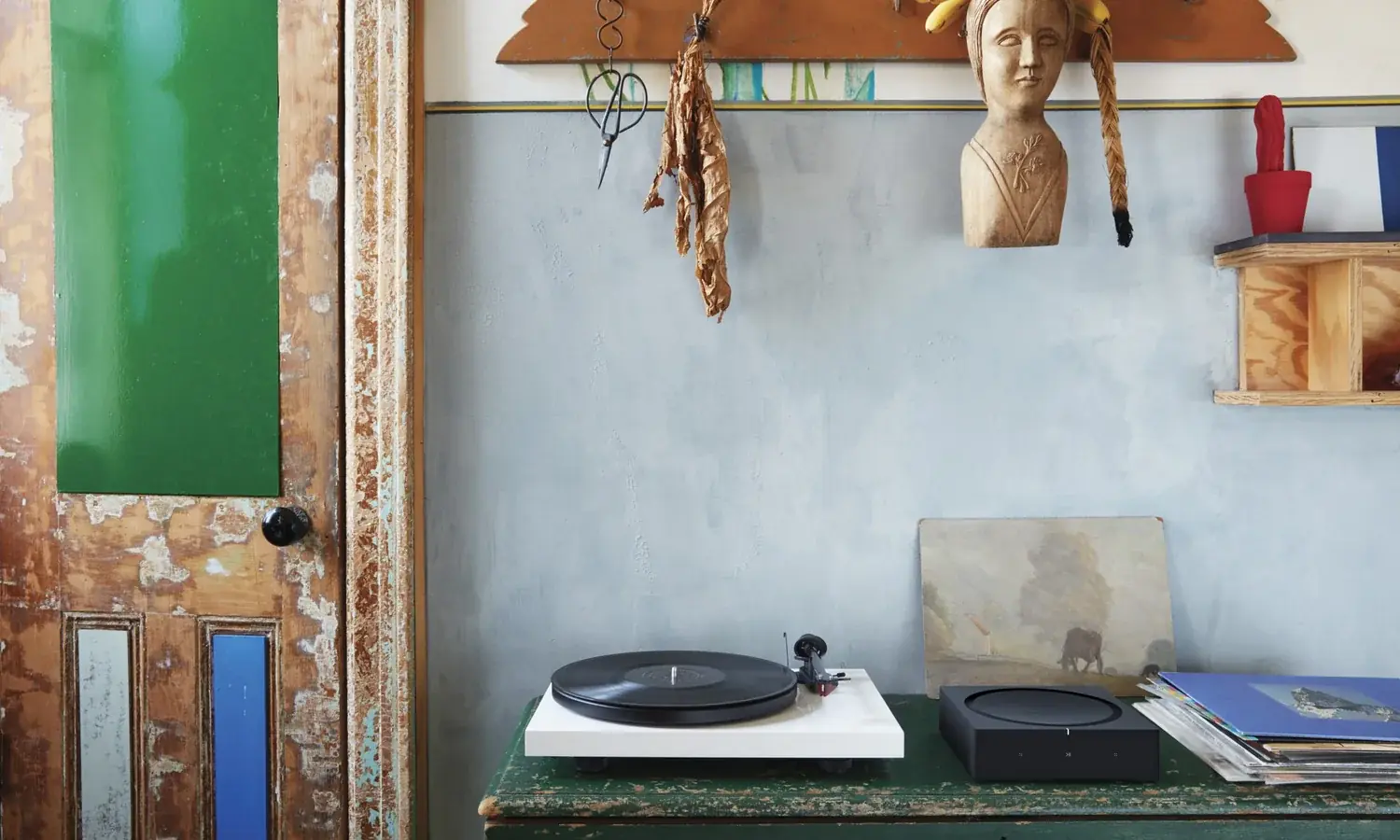
The piece most people do not know Sonos makes is the one we use most. The Sonos Amp is a 125-watt-per-channel amplifier with HDMI ARC, a line input for a turntable and a subwoofer output, and it turns any pair of passive speakers into a Sonos zone. Sonos's own architectural speakers are built by Sonance — in-ceiling, in-wall and outdoor pairs that Trueplay can tune — and they are good. But the Amp does not care whose speakers it drives. A pair of KEF Ci in the kitchen ceiling on a Sonos Amp is a common Blue Note install, and the client never knows the difference from the app.
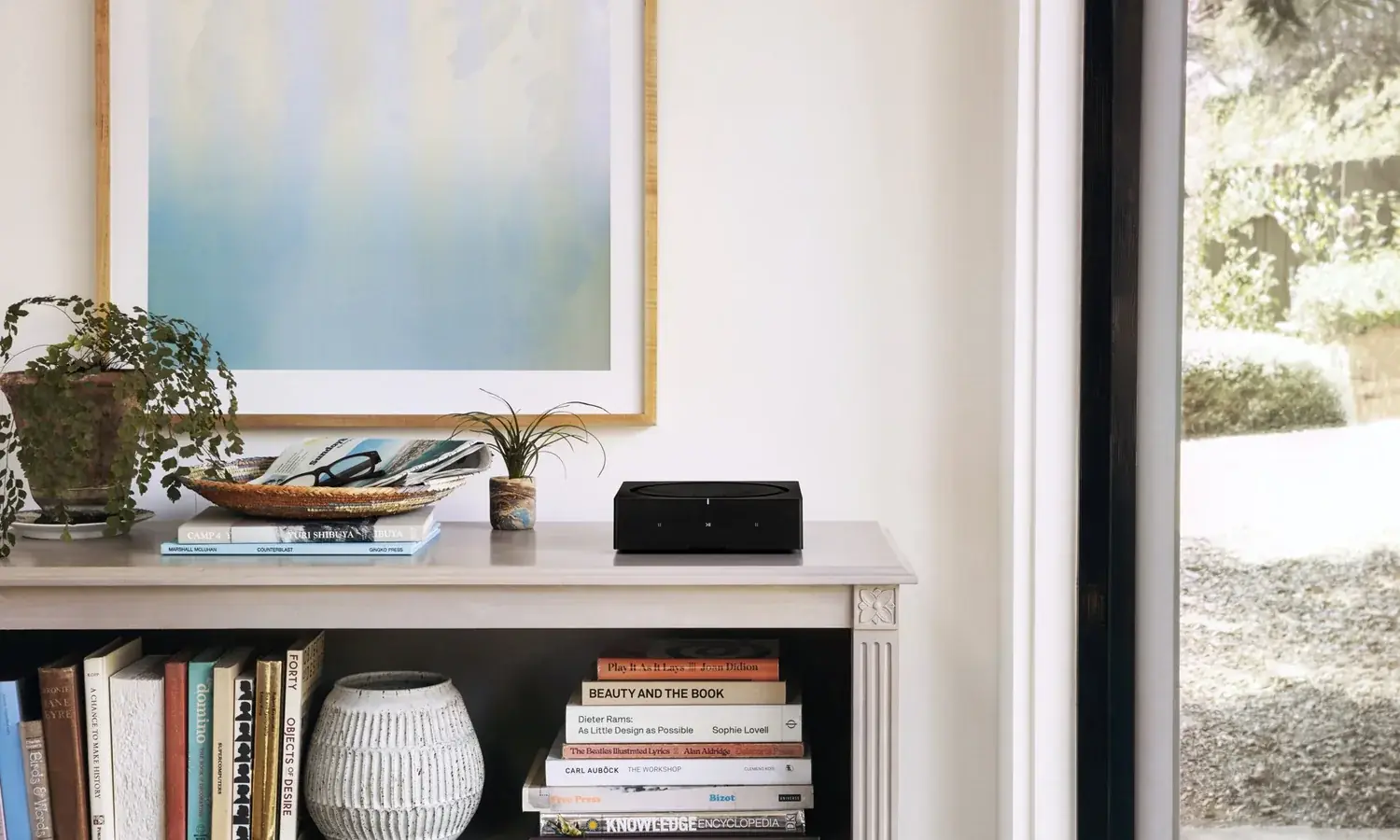
The limit is scale. Four or five zones on Amps is elegant. Sixteen zones is a rack of them and a lot of Wi-Fi, and at that size a dedicated distributed-audio system with Sonos as the source is both cheaper and more reliable. Knowing where that line falls is most of what we add.
Era, Move, AceThe Rest of the Family
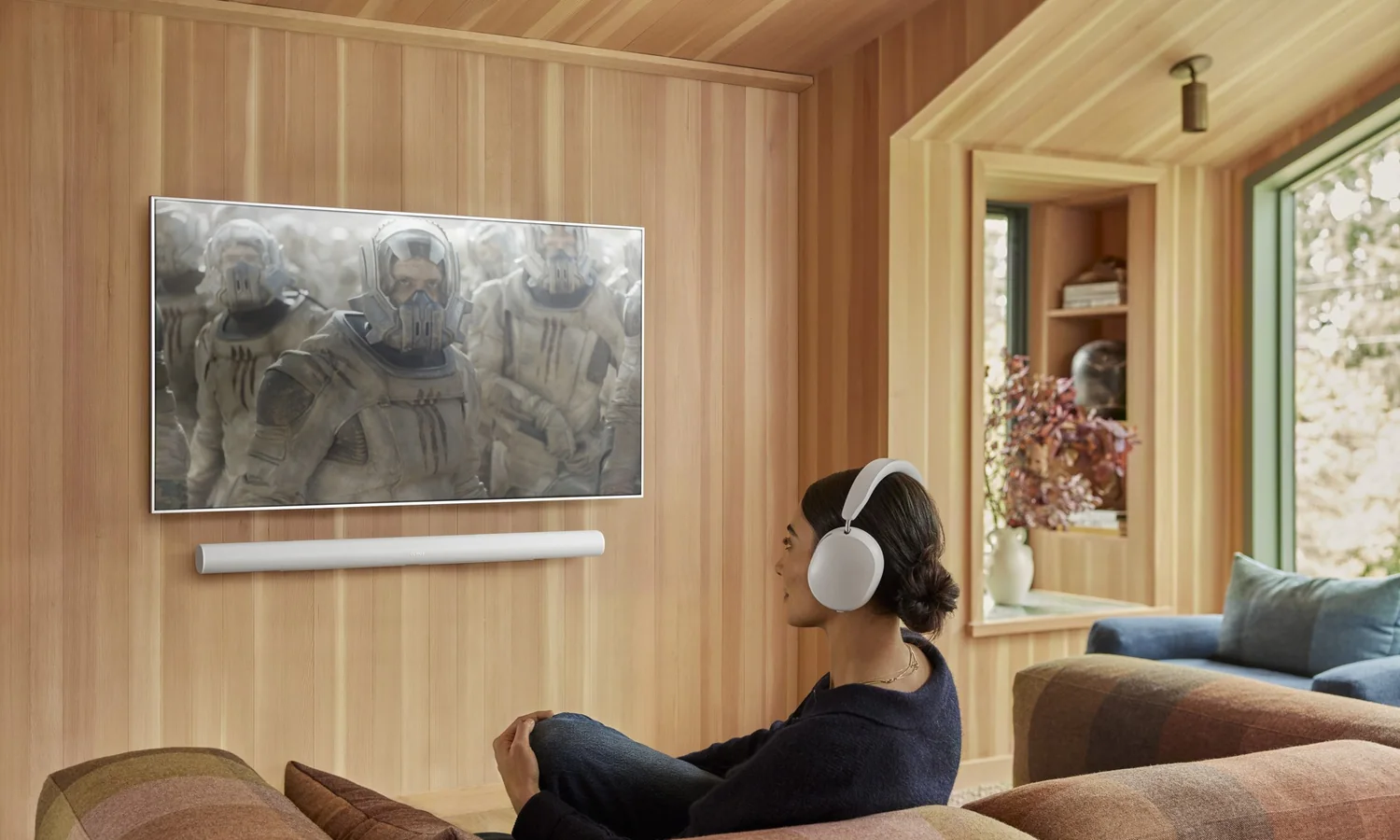
Era 100 is the bookshelf speaker for a bedroom or an office; Era 300 is the one with Atmos that also makes the best surround pair for an Arc Ultra. Move 2 and Roam 2 are the portables that go to the pool and come back. The Ace headphones, and now the Ace Ultra with adaptive noise canceling and a 35-hour battery, hand the television's sound to one person at midnight without waking the house. None of these need us to install them, and we say so; we specify them when they are the right answer and let the client buy them wherever they like.
At a GlanceSonos as We Use It
| Product | What It Is | Where It Belongs |
|---|---|---|
| Arc Ultra · Sub 4 · Era 300 | Atmos soundbar system, 9.1.4 | The living room and media room |
| Beam Ultra | Compact 7.1.2 Atmos bar, new September 2026 | Bedrooms, the kitchen television |
| Amp | 125 W/ch streaming amplifier | Driving architectural speakers, a few zones at a time |
| Port | Streaming source, no amplifier | Feeding a whole-house system |
| Architectural by Sonance | In-ceiling, in-wall, outdoor pairs | Rooms that want Sonos end to end |
| Era 100 · Move 2 · Roam 2 · Ace | Bookshelf, portables, headphones | Wherever; no installer required |
The Real WorldWho It's For
Sonos is for the client who wants music everywhere with no learning curve, and for the media room that wants cinema sound from one bar. It is the source of choice in most of the houses we build, whatever speakers are in the ceiling. It is not the control system: lights, shades, the pool and the television live on Control4 or ELAN, and Sonos sits inside them as the music. The houses that go wrong are the ones where Sonos was asked to be everything; the houses that go right are the ones where it does the part it invented.
Why Sonos
- The streaming platform everyone already knows how to use
- Arc Ultra and Beam Ultra: real Atmos from a bar
- Amp turns any speakers into a zone, including the ones already in the ceiling
- Grows a room at a time
Things to know
- Not a control system; it is the music inside one
- Wi-Fi is the backbone — the network has to be right first
- Past a handful of zones, a distributed system is cheaper and steadier
The right source, the right soundbar, the wrong whole-house plan
Sonos earned its name by making music effortless, and it still does that better than anyone. We use it as the source in most of our houses and as the soundbar in most of our media rooms. We do not use it as the backbone of a sixteen-zone home, and we will tell you why before you buy fifteen Amps.
Best for: The client who wants it to just work, a room or a few rooms at a time, inside a house that is run by something else.
Already have Sonos?
Good. Bring the app. We will show you what it can drive that you did not know about, and where the rest of the house picks up.
Start the Conversation