A great system is not something you buy; it is something that gets built, and the build is where most of the difference lives. The gear matters, but the gear is the easy part. What separates a room that merely works from one that disappears into the home is the process behind it: who shows up at framing, who sweats the calibration, who answers the phone a year later. This is how a Blue Note A/V project goes, from the first call to the last detail, and why the relationship does not end when the technology is turned on.
The First CallIt Starts With Listening
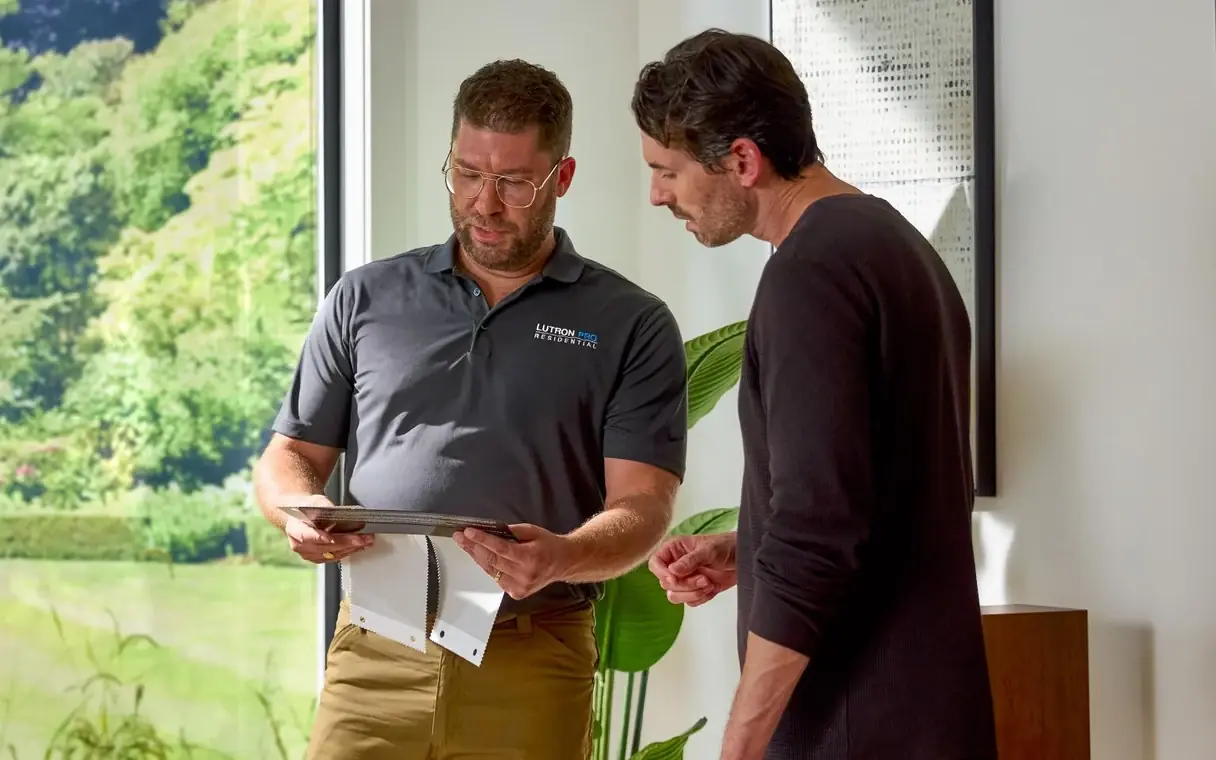
Every project begins with a conversation, not a quote. Before we talk about brands or budgets, we want to understand how you actually live in the house: which rooms matter, who uses them, what a good evening looks like, what has frustrated you before. A dedicated theater for serious movie nights is a different brief from a great room that has to do a little of everything. We ask a lot of questions early because the answers shape every decision that follows, and because the best systems are the ones built around how a family really lives, not around a spec sheet or a sales target.
The WalkthroughSeeing the Home in Person
Plans only tell us so much, so we walk the space. We look at sightlines and seating, where speakers can go and where they cannot, how daylight moves through a room, where the equipment will live and how it will stay cool and quiet. In a home under construction we read the drawings alongside the builder; in a finished home we work out how to add what you want with the least disruption to what is already there. This is also where we catch the problems early, the structural wall, the short projector throw, the glass wall with nowhere to put sound, while they are still easy and inexpensive to solve.
Design and EngineeringThe System on Paper First
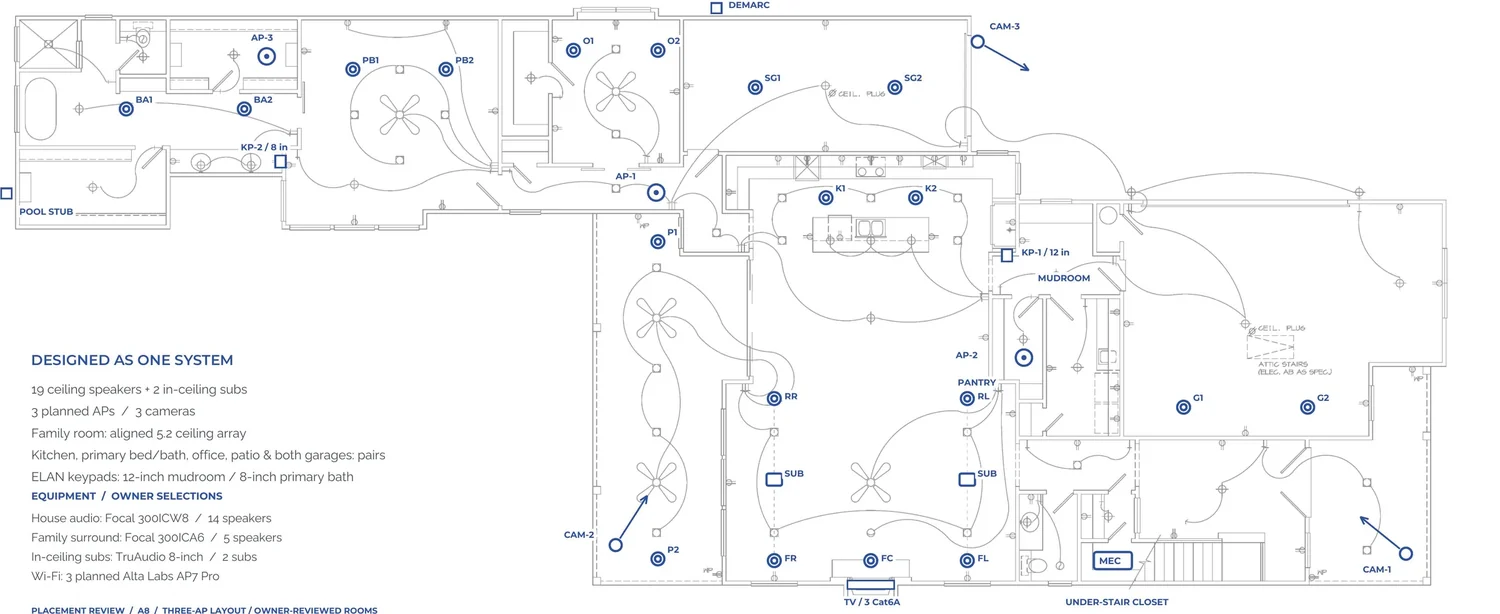
Then we design it, in detail, before a single box is ordered. Every project is modeled and documented: speaker and seat placement, screen size and throw, rack layout, wiring runs, power and network, all of it, so there are no surprises on site. You see the plan and a single, clear proposal, not a parts list to decode on your own. Designing it fully up front is what lets the installation go smoothly and the finished room look intentional, because the hard decisions were made deliberately at a desk, in a drawing we can all look at, instead of improvised later on a ladder.
Rough-InIn the Walls Before the Drywall
On new construction and remodels, the most important work happens before anyone can see it. We are on site during framing to run wire, place backing and set the infrastructure for everything that comes later: speakers, displays, keypads, networking, power, and the conduit that leaves room to grow. Getting this right is the difference between a clean result and a lifetime of compromises, because wire and backing are nearly free before the drywall and painfully expensive after. We coordinate with your builder and the other trades so the system is planned into the house, not fought in around it.
InstallationThe Part You Do Not See
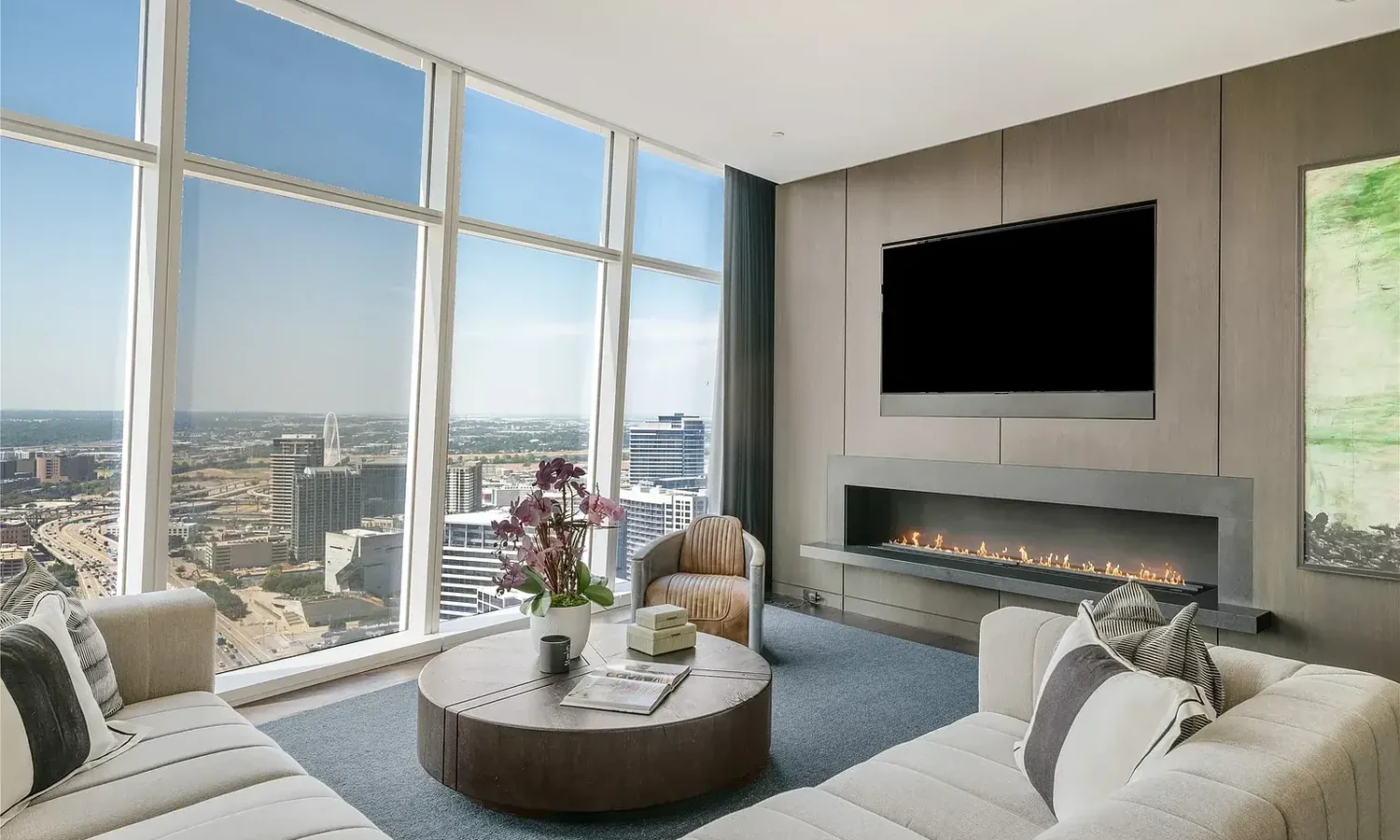
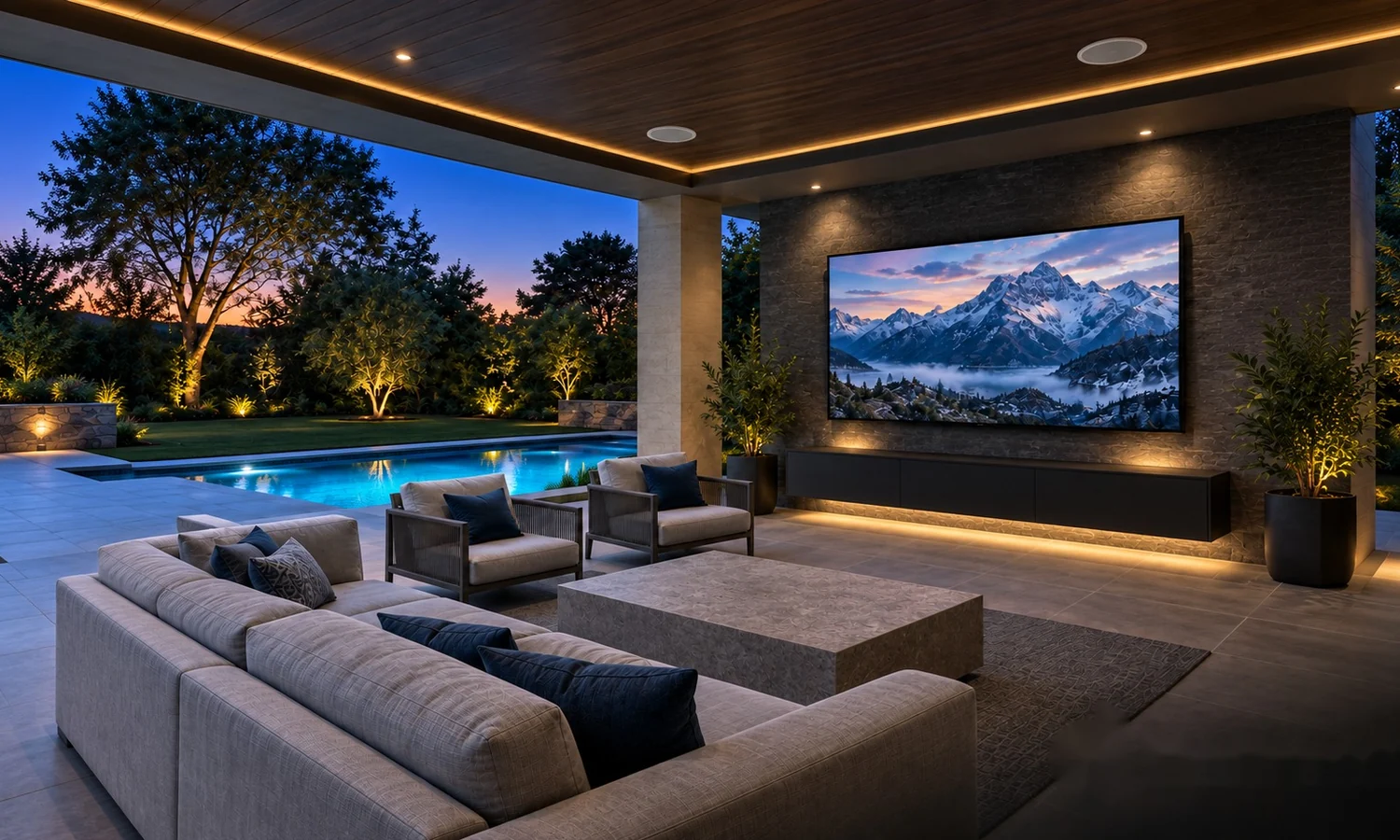
When it is time to install, the goal is work you never notice. Displays sit flush, speakers disappear into ceilings and walls, and the electronics land in a rack that is built, labeled and dressed so that any technician, ours now or anyone’s years from now, can read it at a glance. The craft here is in the details that never show up in a photo: cable management, grounding, airflow, clean power, current firmware. A tidy rack is not vanity; it is what keeps a system reliable for years and serviceable in minutes instead of hours when something eventually needs attention.
CalibrationWhere It Comes to Life
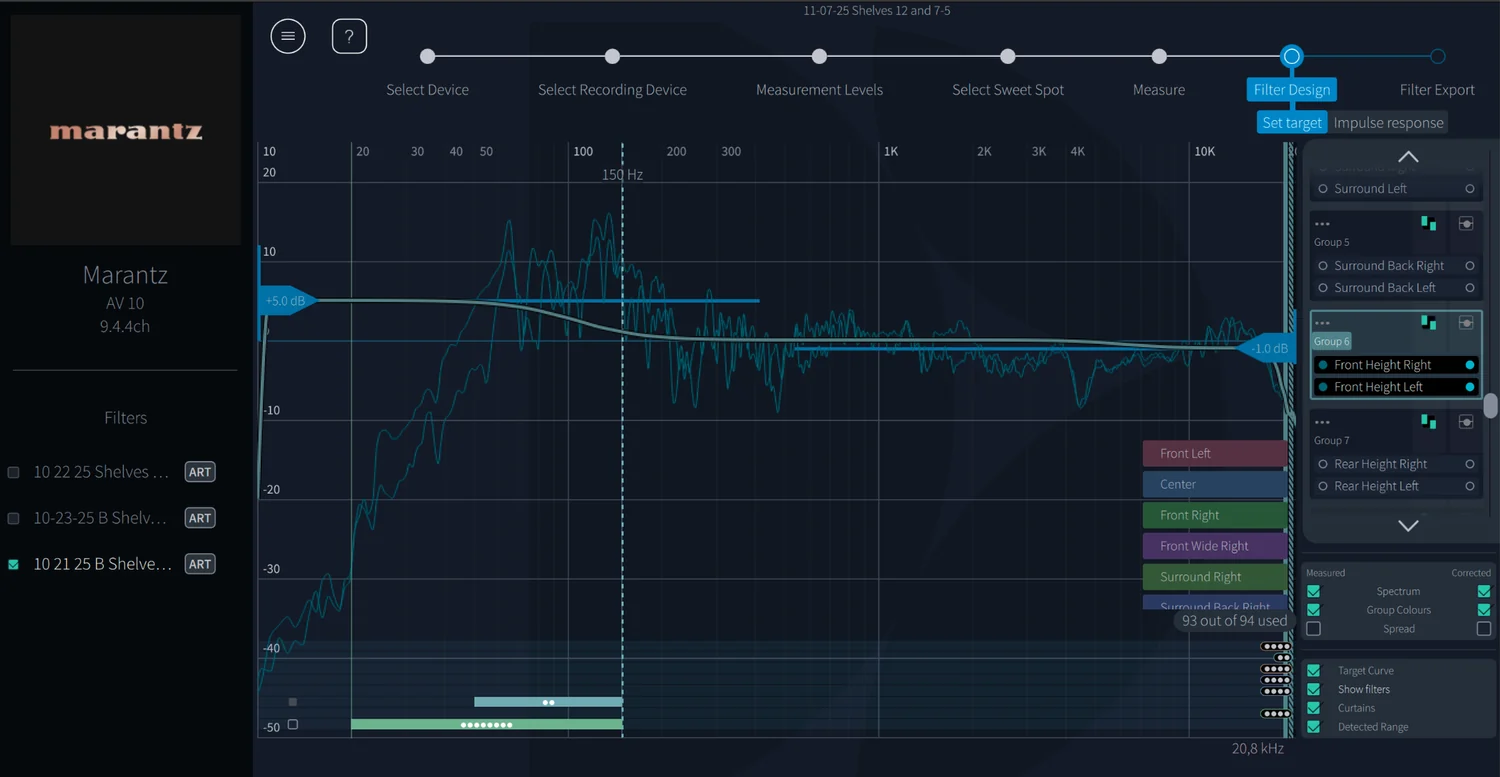
Anyone can mount a television. The difference is in the tuning, and this is where a Blue Note room pulls ahead. We treat and correct the room so the sound is even in every seat, calibrate the video so the picture is accurate rather than merely bright, and program the control system so that one button does what you actually mean by it. It is meticulous, measured work, instruments rather than opinions, and it is the step most installers rush and we refuse to. It is the reason the very same equipment looks and sounds better in a room we finished than it does out of the box.
The HandoffYours to Actually Use
A system you cannot operate is not finished, so we hand it over properly. We walk you and your family through it, set it up the way you will really use it day to day, and leave it simple enough that a guest or a sitter can figure it out too. Clear documentation, labeled remotes, an app that makes sense instead of a drawer of clickers. The measure of a good handoff is quiet: the technology gets out of the way and the house just works, the way you pictured it back when we had that first conversation about how you wanted to live in it.
EncoreWe Do Not Disappear
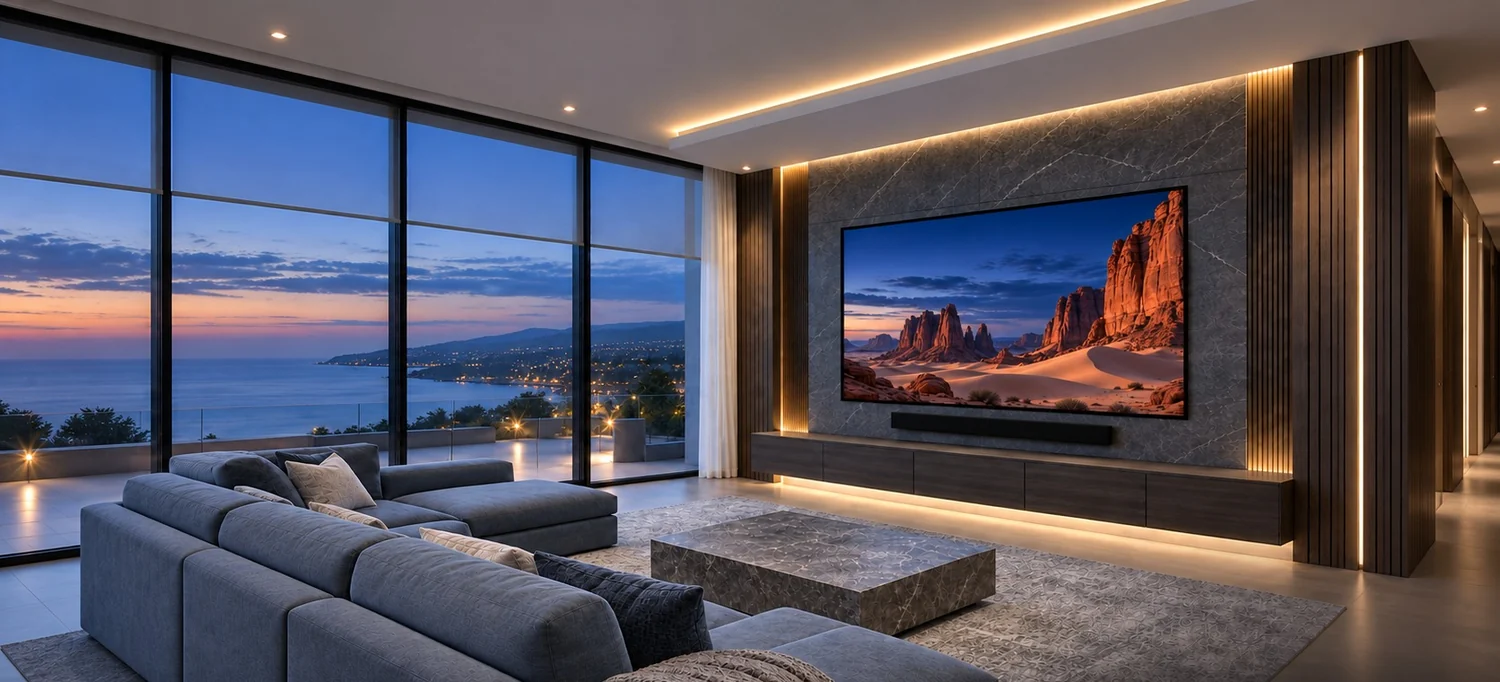
Here is where we are different: the project does not end at the handoff. Encore is our ongoing service program, built to keep problems from ever reaching you. We monitor the network and the systems around the clock, keep firmware current and compatible, and when something does need a human, a certified technician is at the house within two business days of your request, sooner on the higher tiers, and it is guaranteed in writing. Not a call center, not a ticket number. A home full of technology needs someone who knows it to keep it running, and with Encore that someone is the same team that built it.
| Step | What Happens | What You Get |
|---|---|---|
| First call | We ask how you live in the house before we talk brands or budgets | A brief built around your family, not a spec sheet |
| Walkthrough | Sightlines, seating, daylight, where the gear lives and how it stays cool | Problems caught while they are still cheap to solve |
| Design | Placement, screen, rack, wiring, power and network drawn out in full | One clear proposal and a plan we can all look at |
| Rough-in | Wire, backing and conduit set during framing, coordinated with your builder | Infrastructure that leaves room to grow |
| Installation | Flush displays, hidden speakers, a rack built, labeled and dressed | Work you never notice, serviceable in minutes |
| Calibration | Room correction, video calibration, control programmed to what you mean | The same equipment, performing better than out of the box |
| Handoff | A walkthrough for the family, clear documentation, an app that makes sense | A house that just works |
| Encore | Around-the-clock monitoring, firmware kept current, a guaranteed on-site response | The team that built it, keeping it running |
The same company listens, designs, wires, installs, calibrates and then services the system. One number to call, one team that knows your house.— Blue Note A/V
One Team, Start to FinishWhy It Matters
Because the same company listens, designs, wires, installs, calibrates and then services the system, nothing falls through the cracks between trades or between vendors. There is one number to call and one team that knows your house, from the wire in the walls to the way you like the lights set on a Friday night. That continuity is the entire point of working this way. It is what turns a pile of excellent equipment into a home that simply works, and keeps working, for the people who actually live in it.
Start with the first call
Tell us about the house and how you live in it. The conversation is free, and it is where every one of our projects begins.
Start with the free call